
Smart Home Environmental Monitoring: Sensors, Data, and Systems for Healthier Homes
Why Every Home Should Monitor Air, Water, and Climate
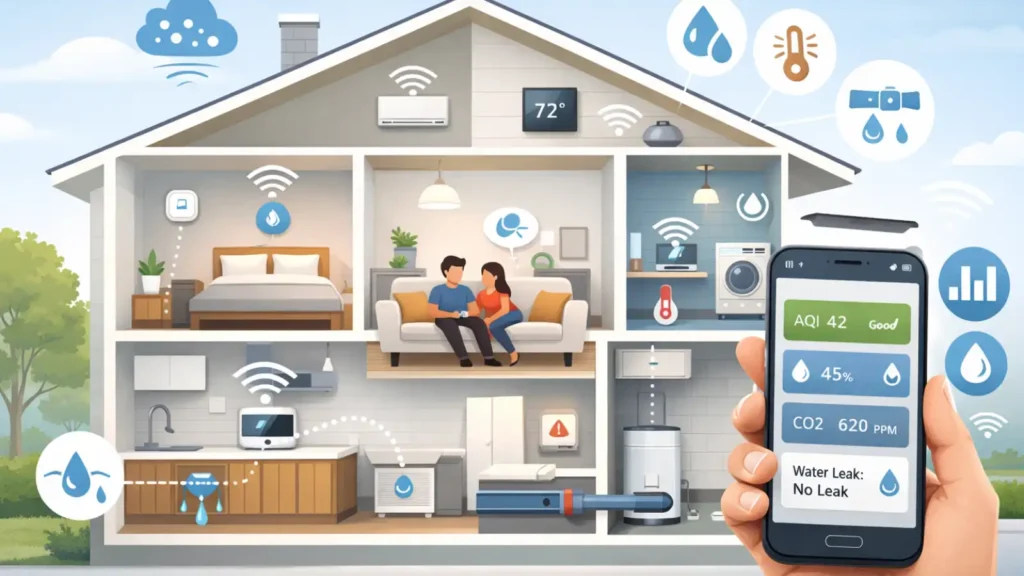
Modern homes are more comfortable and technologically advanced than ever before. Yet, many households still operate with little visibility into the environmental conditions inside their homes. Factors such as indoor air pollution, hidden water leaks, and unstable humidity levels often go unnoticed until they create health issues, structural damage, or costly repairs.
This is where smart home environmental monitoring becomes essential. By combining connected sensors, data dashboards, and automation systems, homeowners can continuously track environmental conditions and respond to potential problems before they escalate.
Environmental monitoring systems transform a home from a passive living space into an intelligent environment—one that actively measures conditions, analyzes patterns, and alerts occupants when something needs attention.
The Invisible Environmental Risks Inside Modern Homes
Many environmental hazards inside homes are invisible, odorless, and slow to develop, which makes them difficult to detect without monitoring technology.
For example, indoor air can contain pollutants such as particulate matter (PM2.5), carbon dioxide (CO₂), and volatile organic compounds (VOCs). These pollutants originate from everyday activities like cooking, cleaning, burning candles, or using household chemicals.
Over time, poor indoor air quality can contribute to issues such as:
- respiratory irritation
- allergies
- fatigue and headaches
- reduced cognitive performance
Another overlooked risk is excess humidity. When humidity levels remain too high, they create ideal conditions for mold growth and dust mites. On the other hand, air that is too dry can cause skin irritation, respiratory discomfort, and static electricity problems.
Without monitoring systems, these environmental changes often remain unnoticed until they begin affecting comfort or health.
Smart environmental monitoring sensors allow homeowners to track these hidden variables in real time, helping maintain a healthier indoor environment.
Water Leaks and Hidden Structural Damage
Water damage is one of the most expensive home repair issues, and it often starts with a small leak that goes undetected.
Common sources of hidden leaks include:
- pipes under sinks
- water heaters
- washing machines
- dishwashers
- basement plumbing
A slow leak may release only a few drops per minute, but over weeks or months it can damage flooring, drywall, insulation, and structural framing.
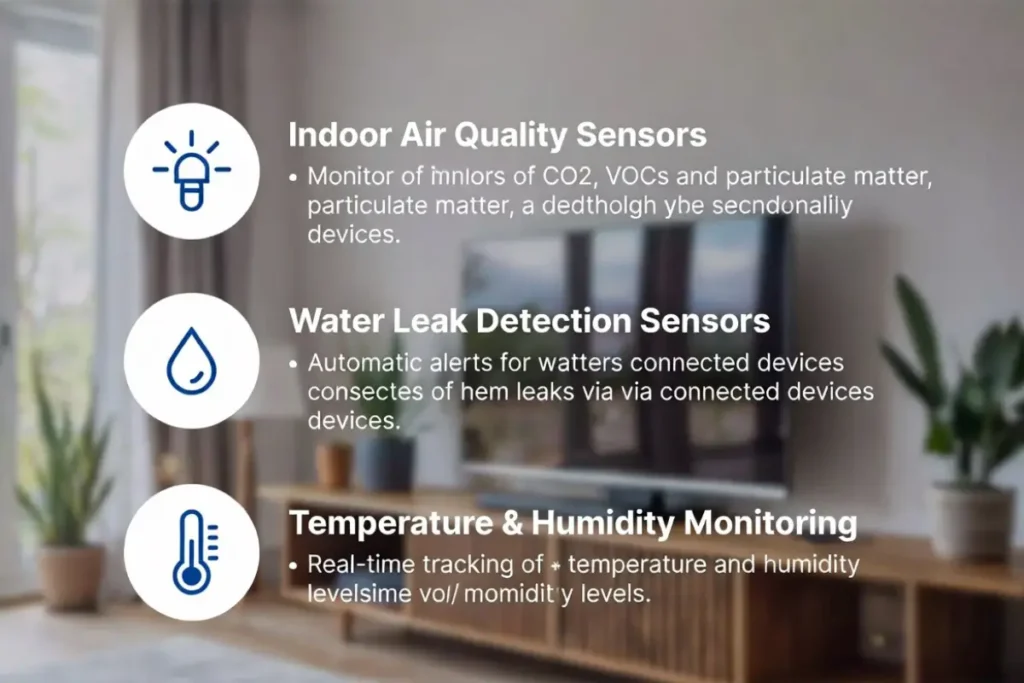
Smart water leak sensors can detect the presence of moisture early and send alerts to a homeowner’s smartphone. Some systems even integrate with automatic shut-off valves, stopping water flow immediately to prevent further damage.
Early detection through monitoring technology can save homeowners thousands of dollars in repair costs.
Climate Control and Home Comfort
Temperature and humidity also play a significant role in overall home comfort and energy efficiency.
A home with balanced temperature and humidity offers several advantages:
- improved sleep quality
- reduced mold risk
- lower heating and cooling costs
- better preservation of furniture and electronics
For instance, maintaining indoor humidity between 30% and 50% helps prevent mold growth while keeping indoor air comfortable.
Smart monitoring systems allow homeowners to observe climate trends over time rather than relying on occasional thermostat readings. This data can reveal patterns such as:
- humidity spikes in bathrooms
- overheating in attic spaces
- cold zones in basements
Once identified, these issues can be addressed through ventilation improvements, HVAC adjustments, or smart automation.
Early Warning Systems for Home Safety
Environmental monitoring also acts as an early warning system for potentially dangerous conditions.
Modern smart homes often include sensors that monitor:
- smoke and fire indicators
- carbon monoxide levels
- natural gas leaks
- extreme temperatures
When abnormal conditions appear, these sensors can send immediate alerts to mobile devices or trigger alarms within the home.
This proactive approach provides homeowners with valuable response time, which can be critical in emergency situations.
For example, detecting carbon monoxide early can prevent serious health risks, while detecting extreme temperatures can protect pets, plants, and sensitive electronics.
From Reactive Living to Proactive Home Management
Traditionally, homeowners only addressed environmental issues after a problem became visible—for example, noticing mold on walls or discovering water damage after a leak.
Smart environmental monitoring shifts this approach from reactive to proactive.
Instead of waiting for problems to appear, homeowners can:
- track environmental trends
- receive automated alerts
- respond quickly to abnormal conditions
- prevent damage before it occurs
This proactive approach supports long-term home maintenance, improved health, and lower repair costs.
In many ways, environmental monitoring is becoming a foundational component of modern smart homes—just as important as security systems or smart lighting.
Understanding the Metrics: What Smart Sensors Measure
A smart home environmental monitoring system is only as useful as the data it collects. Environmental sensors measure specific physical and chemical conditions inside a home and convert them into digital data that can be analyzed, visualized, and acted upon.
These measurements—often called environmental metrics—allow homeowners to understand what is happening in their living spaces in real time. Instead of guessing whether the air feels stuffy or the humidity is too high, sensors provide precise readings that help identify problems early.
Most residential environmental monitoring systems track four major categories of environmental data:
- Indoor air quality
- Temperature and humidity
- Water conditions and leaks
- Safety-related gases and hazards
Understanding these metrics is the first step toward building a healthier and safer home environment.
Indoor Air Quality Metrics
Indoor air quality (IAQ) refers to the condition of the air inside a building and how it affects the health and comfort of occupants. Because people spend a large portion of their time indoors, maintaining good air quality is critical.
Smart air quality sensors measure several pollutants and environmental indicators.
Particulate Matter (PM2.5)
Particulate matter refers to microscopic particles suspended in the air. The most commonly monitored category is PM2.5, which includes particles smaller than 2.5 micrometers.
These particles are produced by activities such as:
- cooking
- burning candles or incense
- smoke from fireplaces
- outdoor pollution entering through ventilation
Because PM2.5 particles are extremely small, they can travel deep into the lungs and potentially cause respiratory irritation or long-term health effects.
Smart air quality sensors track PM2.5 levels in real time, helping homeowners identify pollution sources and improve ventilation when necessary.
Carbon Dioxide (CO₂)
Carbon dioxide is a naturally occurring gas that humans exhale when breathing. In poorly ventilated spaces, CO₂ levels can accumulate quickly.
High CO₂ levels may contribute to:
- fatigue
- headaches
- reduced concentration
- drowsiness
Monitoring CO₂ levels helps homeowners determine when rooms need better ventilation or fresh air circulation.
Volatile Organic Compounds (VOCs)
Volatile organic compounds are gases released from many common household products, including:
- paints and varnishes
- cleaning chemicals
- furniture materials
- air fresheners
Although some VOCs are harmless in small amounts, elevated concentrations may contribute to irritation of the eyes, nose, or throat.
Smart VOC sensors help detect changes in indoor chemical levels and encourage healthier product choices or improved ventilation.
Temperature and Humidity Monitoring
Temperature and humidity sensors measure the thermal comfort conditions inside a home. These two variables are closely related and often influence each other.
Maintaining balanced climate conditions helps prevent both health issues and structural damage.
Temperature Monitoring
Temperature sensors track how warm or cool indoor spaces are throughout the day. In smart homes, these sensors may be integrated with thermostats or heating and cooling systems.
Monitoring temperature trends helps homeowners identify:
- rooms that overheat during the day
- poorly insulated areas
- HVAC inefficiencies
For example, an attic that becomes excessively hot during summer can transfer heat into the rest of the home, increasing cooling costs.
Relative Humidity
Relative humidity represents the amount of moisture present in the air relative to the maximum amount the air can hold at a given temperature.
Humidity levels that are too high or too low can cause problems.
High humidity (above 60%) may lead to:
- mold growth
- condensation on windows
- dust mite populations
Low humidity (below 30%) may cause:
- dry skin and respiratory discomfort
- static electricity
- cracking of wooden furniture
Smart humidity sensors help maintain ideal humidity levels—typically between 30% and 50%—for comfort and home preservation.
Water Monitoring Metrics
Water monitoring sensors are designed to detect moisture, leaks, or abnormal water flow inside a home. These sensors are especially important in areas where plumbing systems operate.
Common monitoring locations include:
- under sinks
- near water heaters
- behind washing machines
- around basement pipes
Water Leak Detection
Leak sensors detect the presence of water using conductive probes or moisture-sensitive materials. When water touches the sensor, it triggers an alert.
Even a small leak can lead to serious problems if ignored. Moisture accumulation may damage flooring, drywall, insulation, and structural wood components.
By detecting water early, monitoring systems help prevent expensive repairs and long-term mold issues.
Water Pressure and Flow
Some advanced monitoring systems also track water pressure or flow patterns.
Unusual pressure changes may indicate:
- pipe blockages
- hidden leaks
- plumbing system failures
Tracking water flow patterns can also help identify excessive usage or potential pipe bursts.
Safety and Hazard Monitoring
In addition to comfort and maintenance, environmental monitoring also plays a crucial role in home safety.
Several sensors are designed to detect hazardous conditions before they become emergencies.
Carbon Monoxide (CO)
Carbon monoxide is a colorless and odorless gas produced by incomplete combustion from sources such as gas appliances, furnaces, and fireplaces.
Exposure to high levels of carbon monoxide can be extremely dangerous. Because the gas cannot be detected by human senses, monitoring sensors are essential for safety.
Smart carbon monoxide detectors continuously measure CO levels and trigger alarms if concentrations become dangerous.
Smoke and Fire Indicators
Smoke sensors detect airborne particles produced by combustion. These sensors provide early warning in case of fire, allowing occupants to evacuate quickly.
Modern smart smoke detectors can also send alerts to mobile devices if an alarm occurs while homeowners are away.
Gas Leak Detection
Gas sensors monitor for leaks from natural gas or propane systems used for cooking and heating.
Early detection allows homeowners to shut off gas supplies and ventilate the area before the gas accumulates to dangerous levels.
Turning Environmental Data into Actionable Insights
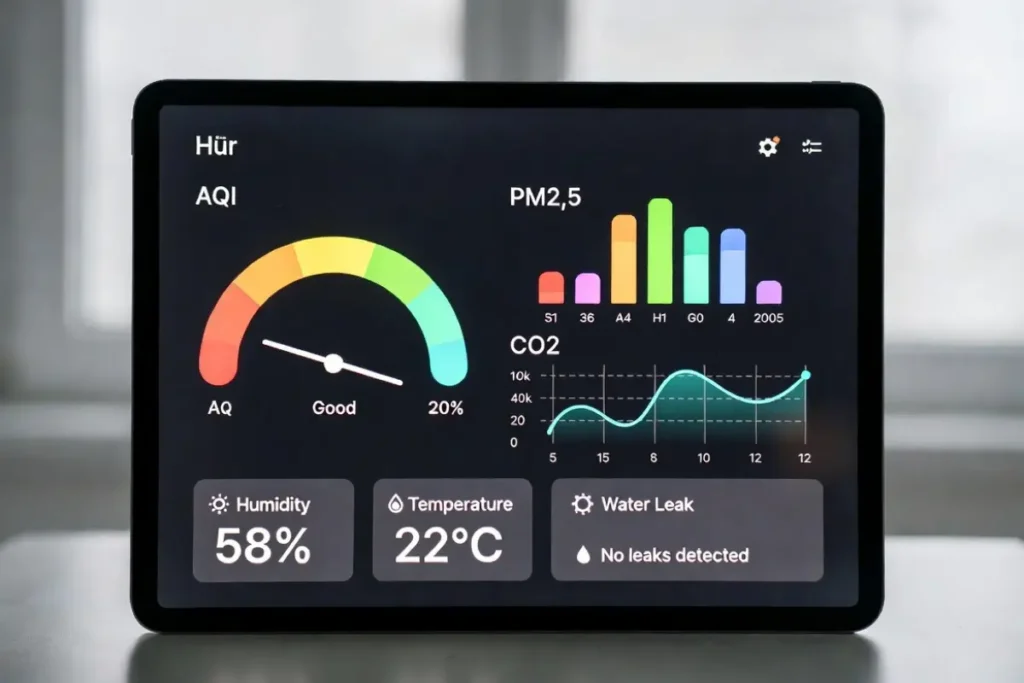
Collecting environmental data is only the first step. The real value of smart monitoring systems lies in their ability to interpret this data and guide decisions.
When sensor readings are displayed in dashboards or mobile applications, homeowners can observe patterns such as:
- air pollution spikes during cooking
- humidity increases after showers
- temperature drops overnight in certain rooms
With this knowledge, homeowners can take meaningful actions—such as improving ventilation, adjusting HVAC settings, or installing dehumidifiers.
Over time, these small improvements help create a home environment that is healthier, safer, and more energy efficient.
Explore our Water Quality Guide for more details.
Smart Home Environmental Sensors: Choosing the Right Sensors for Your Home
Environmental monitoring begins with sensors. These small devices are the foundation of every smart monitoring system because they detect environmental changes and convert them into digital signals that software platforms can analyze.
In a modern smart home, environmental sensors can track everything from air pollution to water leaks and temperature changes. Each sensor specializes in measuring a specific condition, and together they create a network of monitoring points throughout the home.
Choosing the right sensors is an important step toward building a reliable monitoring system. Homeowners should consider what environmental conditions they want to track, where those conditions are most likely to occur, and how the sensors will integrate with their smart home ecosystem.
Air Quality Sensors
Air quality sensors are among the most important environmental monitoring devices because they measure pollutants that can affect human health.
Most residential air quality sensors monitor a combination of the following environmental indicators:
- particulate matter (PM2.5 and PM10)
- carbon dioxide (CO₂)
- volatile organic compounds (VOCs)
- temperature and humidity
These sensors typically use technologies such as laser particle counters or gas detection modules to analyze air composition.
Air quality sensors are especially useful in rooms where pollution sources are common, including:
- kitchens
- living rooms
- home offices
- bedrooms
For example, cooking can temporarily increase PM2.5 levels, while poor ventilation may cause carbon dioxide to accumulate in sleeping areas overnight.
Monitoring these conditions helps homeowners improve ventilation, reduce pollution sources, and maintain healthier indoor air.
Temperature and Humidity Sensors
Temperature and humidity sensors measure the thermal and moisture conditions within a home. Many smart thermostats already include built-in temperature sensors, but dedicated environmental sensors can provide additional monitoring in specific rooms.
These sensors usually rely on thermistors for temperature measurement and capacitive humidity sensors for detecting moisture in the air.
Common monitoring locations include:
- bedrooms
- bathrooms
- basements
- attics
- garages
Basements and bathrooms often experience higher humidity levels due to moisture and limited ventilation. Monitoring these spaces helps homeowners identify conditions that could lead to mold growth.
Similarly, temperature sensors placed in multiple rooms can reveal uneven heating or cooling patterns, helping homeowners optimize their HVAC systems.
Water Leak and Moisture Sensors
Water leak sensors play a crucial role in preventing property damage. These devices detect moisture or standing water and immediately alert homeowners when a leak occurs.
Most leak sensors use conductive probes that trigger a signal when water completes an electrical circuit between the sensor contacts.
Leak sensors should be installed near areas where plumbing failures are most likely.
Typical installation locations include:
- under sinks
- near washing machines
- around water heaters
- behind refrigerators with ice makers
- in basements
Some advanced monitoring systems combine leak sensors with automatic shut-off valves. When the sensor detects water, the system can automatically close the main water supply valve, preventing additional damage.
Gas, Smoke, and Safety Sensors
Safety sensors are designed to detect hazardous conditions that could threaten the health or safety of home occupants.
Several types of safety sensors are commonly used in smart homes.
Carbon monoxide detectors measure levels of CO gas produced by malfunctioning heating systems or fuel-burning appliances.
Smoke detectors identify airborne particles produced during combustion and provide early warnings of fire.
Gas leak sensors monitor natural gas or propane levels near appliances such as stoves, furnaces, and water heaters.
Many modern safety sensors are part of integrated smart home systems, which means they can send alerts to smartphones or activate alarms automatically.
This connectivity allows homeowners to receive notifications even when they are away from home.
Wireless Communication and Smart Home Integration
Most modern environmental sensors rely on wireless communication to transmit data to a central hub or cloud platform. Wireless connectivity makes installation easier and allows sensors to be placed throughout the home without running cables.
Several communication protocols are commonly used in smart home monitoring systems.
Wi-Fi sensors connect directly to home internet networks and are easy to install, but they may consume more power than other options.
Zigbee and Z-Wave sensors use low-power mesh networking, allowing sensors to communicate with each other and extend network coverage throughout the home.
Bluetooth sensors are often used for short-range monitoring or portable devices.
More recently, the Matter smart home standard has emerged as a unified communication protocol designed to improve compatibility between devices from different manufacturers.
Choosing sensors that support widely adopted standards ensures better integration with smart home platforms such as voice assistants, automation hubs, and monitoring dashboards.
Strategic Sensor Placement
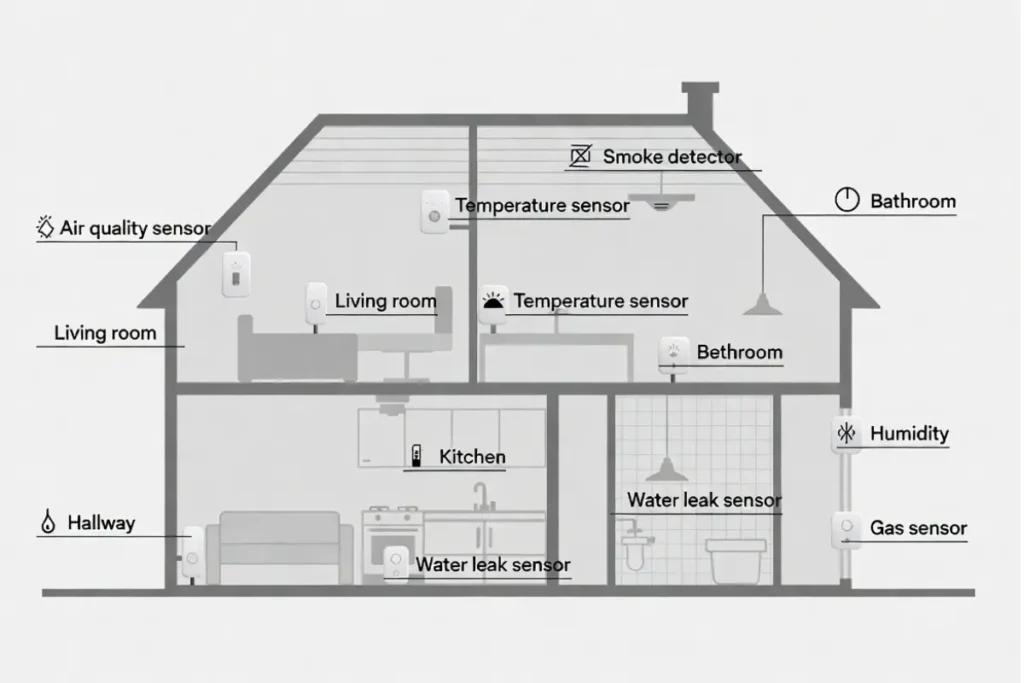
Installing sensors in the right locations is just as important as choosing the correct devices.
Poor placement can produce inaccurate readings or prevent sensors from detecting environmental changes effectively.
For air quality sensors, placement recommendations often include:
- installing sensors at breathing height
- avoiding direct airflow from vents or windows
- keeping sensors away from strong pollution sources unless specifically monitoring them
Humidity sensors should be placed in areas where moisture levels fluctuate, such as bathrooms or basements.
Leak sensors should sit directly on the floor near potential leak sources so they can detect even small amounts of water.
By distributing sensors across key areas of the home, homeowners can create a comprehensive environmental monitoring network that provides reliable data across multiple rooms.
Smart Home Environmental Monitoring Systems: How Everything Connects
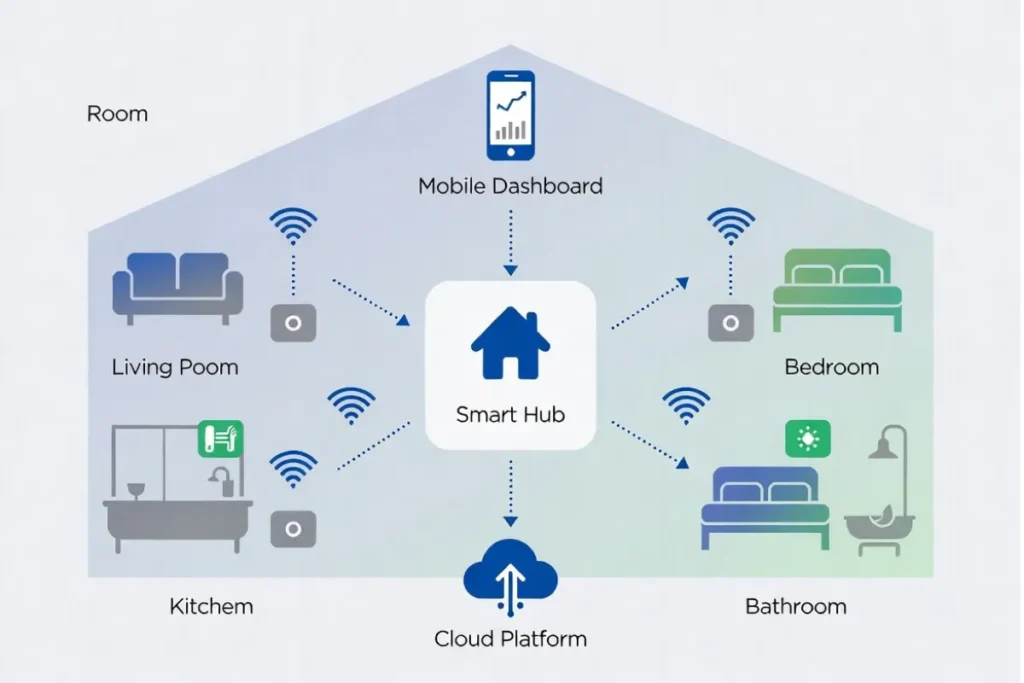
Individual sensors are useful, but the true power of smart environmental monitoring emerges when multiple sensors work together as a connected system. Instead of isolated devices providing separate readings, a monitoring system collects environmental data from across the home and organizes it into a unified dashboard.
This integrated approach allows homeowners to understand how environmental conditions interact and how those conditions change over time. For example, a system might show that humidity rises in the bathroom after showers, that carbon dioxide levels increase overnight in bedrooms, or that temperature drops significantly in the basement during winter.
A typical smart home environmental monitoring system consists of four major components:
- environmental sensors
- communication networks
- processing hubs or gateways
- cloud dashboards and applications
Together, these components create a continuous monitoring ecosystem that keeps homeowners informed about the health and safety of their indoor environment.
Sensors: The Data Collection Layer
Sensors form the first layer of any environmental monitoring system. Each sensor is responsible for measuring a specific environmental parameter, such as air quality, humidity, temperature, or water presence.
When environmental conditions change, sensors convert those physical signals into digital data. For example:
- an air quality sensor detects changes in particulate concentration
- a humidity sensor measures moisture levels in the air
- a leak sensor detects the presence of water on the floor
Many sensors collect readings every few seconds or minutes, allowing the monitoring system to track environmental conditions continuously.
Modern smart homes often contain multiple sensors placed in different rooms, forming a distributed network that captures environmental data throughout the entire living space.
Communication Networks and Connectivity
Once sensors collect environmental data, that information must be transmitted to a central system for analysis. This communication typically occurs through wireless networks designed for smart home devices.
Several wireless protocols are commonly used in environmental monitoring systems.
Wi-Fi networks allow sensors to connect directly to a home’s internet router. This approach is simple to install but can consume more battery power.
Zigbee and Z-Wave networks use low-power mesh communication. In these systems, sensors can relay signals through neighboring devices, extending coverage throughout large homes.
Bluetooth Low Energy (BLE) is often used for short-range sensors that connect to nearby hubs or smartphones.
Newer ecosystems increasingly support Matter, an interoperability standard designed to allow devices from different manufacturers to communicate more easily.
By using these wireless technologies, environmental monitoring systems can collect data from sensors located anywhere in the home.
Smart Hubs and Gateways
In many smart homes, environmental sensors connect first to a hub or gateway device before sending data to cloud platforms.
A hub acts as a central coordinator for smart devices. It receives sensor data, processes it locally, and forwards it to online monitoring services.
Common features of smart home hubs include:
- device pairing and configuration
- communication between different wireless protocols
- local data processing
- automation rule management
For example, if a humidity sensor detects excessive moisture in a bathroom, the hub can automatically trigger a connected ventilation fan.
Similarly, if a water leak sensor detects moisture under a sink, the hub can send a notification to the homeowner’s smartphone and activate a smart water shut-off valve.
By coordinating these responses, the hub transforms sensor data into real-time automation actions.
Cloud Dashboards and Mobile Applications
Most modern environmental monitoring systems store sensor data in cloud-based platforms. These services organize data into dashboards that visualize environmental conditions in real time.
Dashboards often display:
- current sensor readings
- historical data trends
- alert notifications
- device status information
For example, a dashboard might show hourly changes in indoor air quality or weekly humidity trends across multiple rooms.
Mobile applications make this information accessible anywhere. Homeowners can check environmental conditions remotely, receive alerts when thresholds are exceeded, and adjust automation settings.
This accessibility helps transform environmental monitoring from a passive system into an interactive home management tool.
Alerts, Thresholds, and Automation
One of the most valuable features of environmental monitoring systems is their ability to respond automatically when conditions exceed predefined limits.
Homeowners can set threshold values for specific environmental metrics.
For example:
- alert when humidity exceeds 60%
- notify when carbon dioxide levels rise above safe limits
- trigger alarm when water is detected near appliances
When a sensor reading crosses one of these thresholds, the system can generate alerts or initiate automated responses.
Automation scenarios may include:
- activating an air purifier when PM2.5 levels rise
- turning on a dehumidifier when humidity increases
- shutting off water supply when a leak is detected
These automated responses allow homes to actively maintain healthy environmental conditions without constant manual intervention.
Environmental Data and Long-Term Insights
Beyond immediate alerts, environmental monitoring systems also provide long-term insights into home conditions.
By analyzing historical data, homeowners can identify patterns such as:
- seasonal humidity fluctuations
- rooms that consistently trap heat
- recurring air pollution events
Understanding these patterns allows homeowners to make informed decisions about ventilation improvements, insulation upgrades, or equipment adjustments.
Over time, these improvements can enhance both home comfort and energy efficiency while reducing potential maintenance issues.
In this way, environmental monitoring systems act not only as detection tools but also as decision-support systems for smarter home management.
Smart Home Environmental Monitoring System Architecture
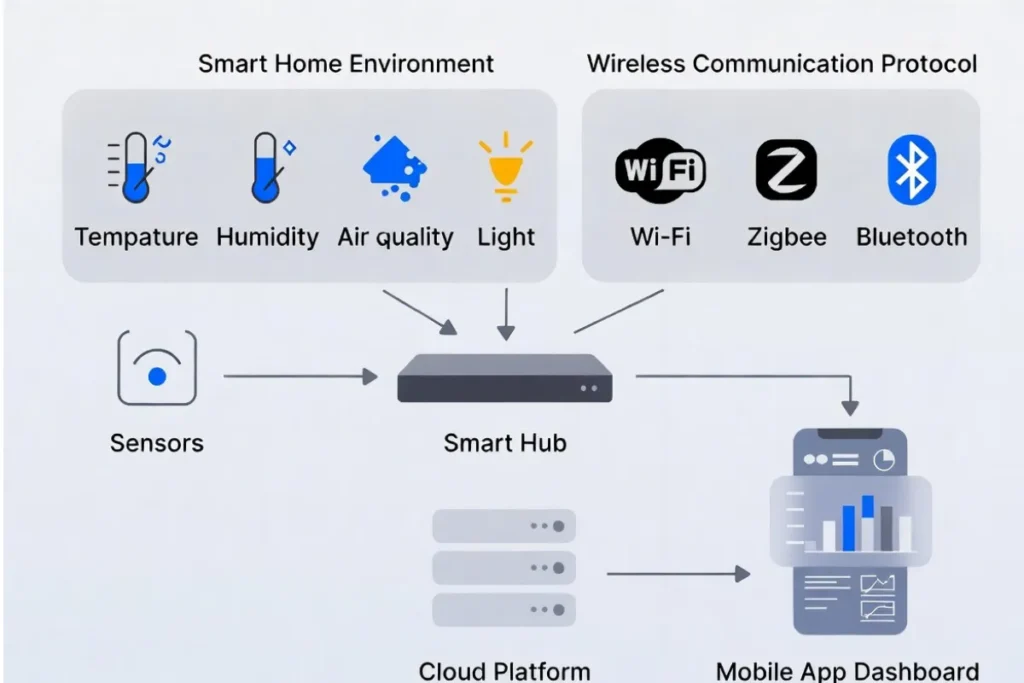
A smart home environmental monitoring system is more than just a collection of sensors. It is a connected architecture that gathers environmental data, transmits it through a network, processes it in software platforms, and delivers actionable insights to homeowners.
Understanding how these components work together helps homeowners choose systems that are reliable, scalable, and compatible with their existing smart home ecosystem.
Most environmental monitoring systems consist of four core layers:
- sensing layer
- communication layer
- data processing layer
- user interface layer
Each layer plays a specific role in ensuring that environmental data moves efficiently from the physical environment to the user.
The Sensing Layer
The sensing layer forms the foundation of the monitoring system. This layer consists of the environmental sensors installed throughout the home to detect conditions such as air pollution, humidity, temperature, water leaks, and gas levels.
Each sensor continuously measures environmental conditions and converts them into digital data that can be transmitted to other components of the system.
For example:
- air quality sensors monitor particulate matter and carbon dioxide
- humidity sensors measure moisture levels in indoor air
- leak sensors detect the presence of water near plumbing systems
Some sensors operate on battery power, while others connect to a home’s electrical system. Battery-powered sensors offer greater flexibility for placement, but they require periodic battery replacement.
Many modern sensors also include built-in microcontrollers that perform basic data filtering and calibration before transmitting readings to the next layer of the system.
The Communication Layer
Once environmental data is captured, it must be transmitted to a central system where it can be processed and analyzed. This function is handled by the communication layer.
Several wireless communication protocols are commonly used in smart home environmental monitoring systems.
Wi-Fi enables sensors to connect directly to the home’s internet network, allowing them to transmit data to cloud platforms without additional hardware.
Zigbee and Z-Wave use low-power mesh networking, which allows sensors to relay signals through nearby devices. This approach improves coverage in larger homes.
Bluetooth Low Energy (BLE) is sometimes used for short-range communication between sensors and nearby hubs or smartphones.
Newer systems may also support the Matter smart home standard, which aims to improve compatibility across devices from different manufacturers.
The choice of communication protocol affects factors such as:
- power consumption
- signal range
- network reliability
- device compatibility
A well-designed communication layer ensures that sensor data is transmitted consistently without significant delays or interruptions.
The Data Processing Layer
After data is transmitted through the communication layer, it reaches the data processing layer. This is where environmental information is stored, analyzed, and converted into meaningful insights.
Processing may occur in one of two primary locations:
Local processing
Some smart home hubs analyze sensor data directly within the home. This approach improves privacy and reduces dependence on internet connectivity.
Cloud processing
Many systems send data to cloud platforms where more advanced analytics can be performed. Cloud-based systems can store large volumes of historical environmental data and apply algorithms to detect trends or anomalies.
For example, cloud platforms can:
- analyze long-term air quality patterns
- detect abnormal humidity increases that could indicate leaks
- track seasonal temperature changes
Combining local and cloud processing can provide both real-time responsiveness and advanced analytics capabilities.
The User Interface Layer
The user interface layer allows homeowners to view environmental data and interact with the monitoring system.
This layer typically includes:
- mobile apps
- web dashboards
- smart home control panels
- voice assistant integrations
Mobile applications often provide real-time readings from sensors installed throughout the home. Users can view current conditions such as indoor temperature, humidity, and air quality.
Many apps also provide historical graphs and trend analysis, allowing homeowners to track environmental changes over time.
Alert notifications are another important feature of the user interface layer. For example, the system may send alerts when:
- carbon monoxide levels rise
- humidity exceeds safe thresholds
- water leaks are detected
- indoor air quality becomes unhealthy
These alerts help homeowners respond quickly to environmental problems before they escalate.
Automation and Smart Home Integration
One of the most powerful aspects of environmental monitoring systems is the ability to automate responses based on sensor data.
Automation rules allow the system to trigger actions when certain environmental conditions occur.
Examples of environmental automation include:
- turning on ventilation systems when CO₂ levels rise
- activating dehumidifiers when humidity becomes too high
- shutting off the water supply when a leak is detected
- adjusting thermostats based on temperature readings
Automation can significantly improve energy efficiency, indoor comfort, and home safety.
Many smart home ecosystems allow users to create these automation rules through visual interfaces in mobile apps or home automation platforms.
Data Security and Privacy Considerations
Because environmental monitoring systems collect continuous data from inside the home, data security and privacy are important considerations.
Homeowners should look for systems that offer:
- encrypted wireless communication
- secure cloud storage
- two-factor authentication for user accounts
- regular firmware updates
Secure systems reduce the risk of unauthorized access to sensor data or control systems.
Some users prefer systems that allow local data storage and processing, minimizing the amount of information sent to external servers.
Scalability and Future Expansion
A well-designed smart home monitoring architecture should allow for future expansion.
Homeowners often begin with a few sensors, such as temperature and humidity monitors, and later add additional devices as their needs grow.
Expandable systems may support:
- additional air quality sensors
- outdoor environmental monitors
- energy consumption sensors
- smart irrigation systems
Choosing platforms that support modular expansion ensures that the monitoring system can evolve along with the home’s technology infrastructure.
Benefits of Smart Home Environmental Monitoring Systems
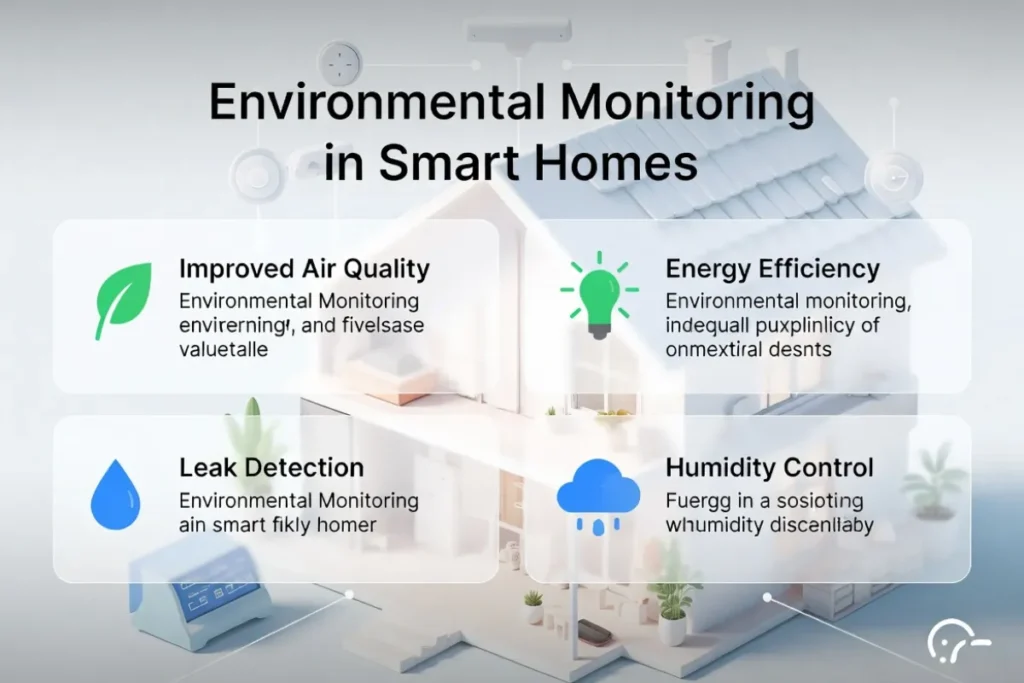
Smart home environmental monitoring systems offer a wide range of benefits that go beyond simple data collection. By continuously measuring indoor conditions such as air quality, humidity, temperature, and potential hazards, these systems help homeowners create a healthier, safer, and more energy-efficient living environment.
As homes become more connected, environmental monitoring has become an important part of modern smart home ecosystems. The insights generated by these systems allow homeowners to respond quickly to problems, optimize home performance, and maintain better control over indoor conditions.
Below are some of the most important advantages of installing a smart home environmental monitoring system.
Improved Indoor Air Quality
One of the most valuable benefits of environmental monitoring is the ability to track and improve indoor air quality.
Indoor air can contain pollutants such as:
- particulate matter (PM2.5 and PM10)
- carbon dioxide (CO₂)
- volatile organic compounds (VOCs)
- allergens and dust particles
Without monitoring tools, these pollutants often go unnoticed. Over time, poor indoor air quality can contribute to respiratory issues, headaches, fatigue, and other health problems.
Air quality sensors allow homeowners to detect elevated pollution levels and take corrective actions such as:
- increasing ventilation
- using air purifiers
- reducing pollution sources
Maintaining good air quality is particularly important for households with children, elderly individuals, or people with respiratory sensitivities.
Early Detection of Environmental Hazards
Environmental monitoring systems can detect potentially dangerous conditions before they become serious problems.
Examples include:
- carbon monoxide leaks
- gas leaks from appliances
- smoke from early-stage fires
- water leaks from plumbing systems
Early alerts allow homeowners to respond quickly and prevent damage or health risks.
For example, a water leak sensor installed under a sink can detect small leaks that might otherwise go unnoticed for weeks. Catching these issues early can prevent expensive repairs and structural damage.
Similarly, carbon monoxide detectors provide critical early warnings of odorless gas buildup, helping protect occupants from poisoning.
Prevention of Mold and Moisture Damage
Humidity monitoring is essential for preventing mold growth and moisture-related damage in homes.
Excess humidity often occurs in areas such as:
- basements
- bathrooms
- laundry rooms
- poorly ventilated spaces
When humidity levels remain high for extended periods, mold spores can grow on walls, ceilings, and furniture.
Smart humidity sensors continuously monitor moisture levels and notify homeowners when humidity exceeds safe ranges.
Some smart home systems can even trigger automation responses, such as:
- activating exhaust fans
- turning on dehumidifiers
- increasing ventilation
By maintaining proper humidity levels, homeowners can reduce the risk of mold growth and protect indoor air quality.
Increased Energy Efficiency
Environmental monitoring systems also help optimize energy usage throughout the home.
Temperature and humidity data can reveal inefficiencies in heating, ventilation, and air conditioning systems.
For example, sensors placed in multiple rooms may reveal that certain areas are:
- consistently warmer or cooler than others
- poorly insulated
- receiving uneven airflow from HVAC systems
These insights allow homeowners to adjust thermostat settings, improve insulation, or rebalance airflow to improve comfort while reducing energy consumption.
Automation features can also improve efficiency by adjusting heating and cooling systems based on real-time environmental conditions.
Remote Monitoring and Real-Time Alerts
Smart home environmental monitoring systems provide real-time insights that homeowners can access from anywhere.
Most systems connect to mobile apps that display current sensor readings and send alerts when environmental conditions change.
For example, users may receive notifications when:
- indoor air quality drops below safe levels
- a water leak is detected
- carbon monoxide levels increase
- temperature exceeds preset thresholds
Remote monitoring is particularly useful for homeowners who travel frequently or manage vacation properties.
Instead of discovering environmental problems after returning home, they can respond immediately when alerts appear on their smartphones.
Data Insights and Long-Term Environmental Trends
Another major advantage of environmental monitoring systems is their ability to collect and analyze historical data.
Over time, the system can reveal trends in environmental conditions throughout the home.
Examples of useful insights include:
- seasonal air quality patterns
- humidity fluctuations during rainy seasons
- temperature variations between rooms
- recurring environmental problems
Analyzing these trends helps homeowners make more informed decisions about home maintenance, ventilation improvements, and energy usage.
Some advanced monitoring platforms also provide data visualization dashboards, allowing users to view charts and environmental reports.
Increased Home Value and Smart Home Integration
Homes equipped with advanced monitoring technology are becoming more attractive to buyers in the modern real estate market.
Environmental monitoring systems can integrate with other smart home technologies, including:
- smart thermostats
- ventilation systems
- smart air purifiers
- automated window systems
- home security platforms
This integration allows homeowners to create a fully automated smart home environment that responds intelligently to environmental conditions.
As smart home adoption continues to grow, environmental monitoring systems are increasingly viewed as a valuable home upgrade.
How to Set Up a Smart Home Environmental Monitoring System
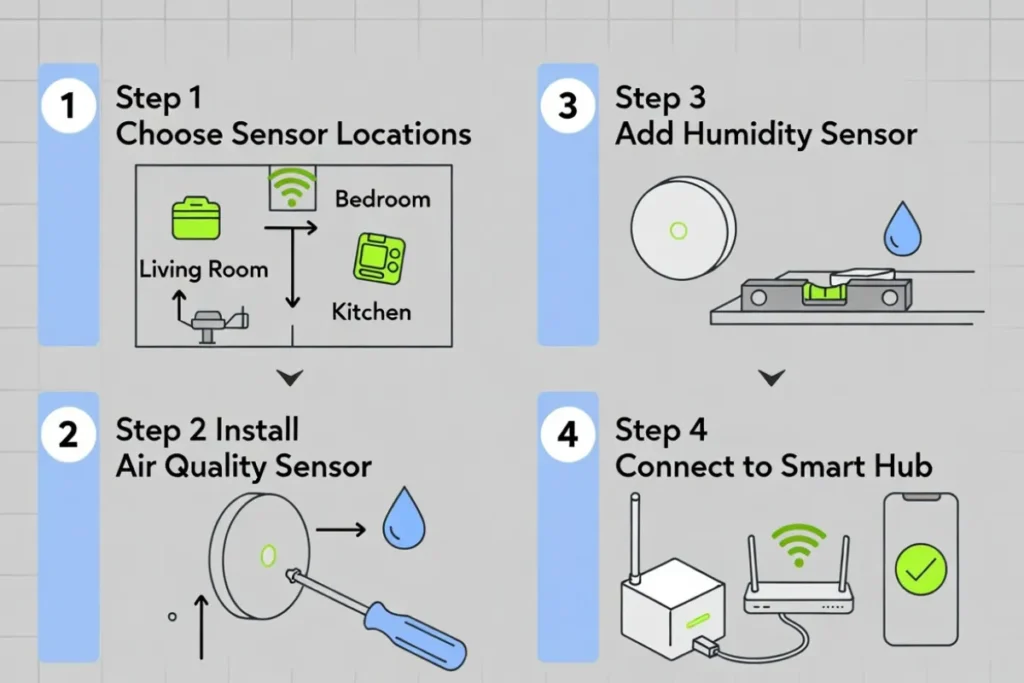
Setting up a smart home environmental monitoring system does not require advanced technical knowledge. With the growing availability of user-friendly devices, most homeowners can install and configure a basic monitoring network in just a few steps.
The setup process typically involves selecting the right sensors, connecting them to a central platform, and configuring alerts or automation rules. A well-planned installation ensures that environmental conditions are monitored accurately across the entire home.
Step 1: Identify the Environmental Factors to Monitor
The first step is determining which environmental conditions you want to track in your home. Different homes have different needs depending on climate, building design, and potential environmental risks.
Common factors that homeowners monitor include:
- indoor air quality
- temperature and humidity
- water leaks
- carbon monoxide levels
- smoke and fire detection
For example, homes located in humid regions may benefit from additional humidity sensors, while houses with older plumbing systems may prioritize water leak detection.
Identifying the most relevant environmental risks helps you choose the appropriate sensors and monitoring devices.
Step 2: Choose Compatible Smart Sensors
Once you know what to monitor, the next step is selecting compatible smart sensors. These sensors should work with your preferred smart home ecosystem and communication protocol.
Important factors to consider when choosing sensors include:
- compatibility with your smart home platform
- wireless communication standard (Wi-Fi, Zigbee, Z-Wave, or Bluetooth)
- battery life
- measurement accuracy
- mobile app support
Many smart home systems allow multiple sensors to connect through a central hub or gateway. Using compatible devices ensures smooth communication and easier system management.
Homeowners should also look for sensors that provide real-time notifications and historical data tracking, as these features greatly improve monitoring capabilities.
Step 3: Install Sensors in Strategic Locations
Correct placement is essential for accurate environmental monitoring. Sensors should be positioned where they can detect environmental changes effectively.
Here are common installation recommendations:
Air quality sensors
- install at breathing height
- avoid placing near windows or direct airflow
Temperature and humidity sensors
- place in frequently used living areas
- install additional sensors in basements or bathrooms
Water leak sensors
- place under sinks
- near water heaters
- behind washing machines
- near refrigerators with water lines
Carbon monoxide and smoke detectors
- install near bedrooms and hallways
- follow local building safety recommendations
Strategically distributing sensors throughout the home helps create a more complete environmental monitoring network.
Step 4: Connect Sensors to the Smart Home Hub or App
After installation, the sensors must be connected to a monitoring platform. This process usually involves pairing the devices with a smart home hub or directly connecting them to a mobile app.
Typical setup steps include:
- downloading the device manufacturer’s mobile app
- creating a user account
- pairing sensors using Bluetooth or Wi-Fi
- assigning each sensor to a room in the app
Once connected, the app begins receiving environmental data from the sensors in real time.
Some advanced platforms also integrate with smart home ecosystems that support voice assistants or automation platforms, allowing users to manage environmental data alongside other smart home functions.
Step 5: Configure Alerts and Notifications
Environmental monitoring systems are most effective when they actively notify homeowners about abnormal conditions.
Users can configure alert thresholds for different environmental factors, such as:
- high humidity levels
- poor air quality readings
- sudden temperature changes
- detected water leaks
- carbon monoxide presence
When sensor readings exceed these thresholds, the system sends instant alerts through mobile notifications, emails, or alarm triggers.
These alerts allow homeowners to respond quickly before environmental issues cause damage or health risks.
Step 6: Create Smart Automation Rules
Many monitoring platforms allow environmental data to trigger automated responses in other smart home devices.
Automation rules can improve comfort, safety, and energy efficiency.
Examples of environmental automation include:
- turning on a ventilation fan when humidity rises
- activating an air purifier when air quality drops
- adjusting thermostat settings based on temperature readings
- shutting off the water supply when a leak is detected
Automation transforms environmental monitoring from a passive system into an active smart home management tool.
Step 7: Maintain and Calibrate Sensors Regularly
To ensure accurate readings over time, environmental sensors require occasional maintenance.
Recommended maintenance practices include:
- replacing batteries when needed
- cleaning air quality sensor vents
- testing smoke and carbon monoxide detectors regularly
- checking for firmware updates
Some sensors may also require periodic calibration to maintain measurement accuracy.
Regular maintenance ensures that the monitoring system continues to provide reliable environmental data.
Smart Home Environmental Monitoring Devices and Systems
Choosing reliable devices is one of the most important steps when building a smart home environmental monitoring system. The market offers a wide range of sensors and monitoring platforms that track indoor air quality, humidity, temperature, gas leaks, and water leaks.
The systems combine accurate sensors, reliable connectivity, and easy integration with smart home ecosystems. Many modern devices also provide mobile apps, automation support, and historical environmental data analysis.
Below are some widely recognized environmental monitoring devices that homeowners commonly use in smart homes.
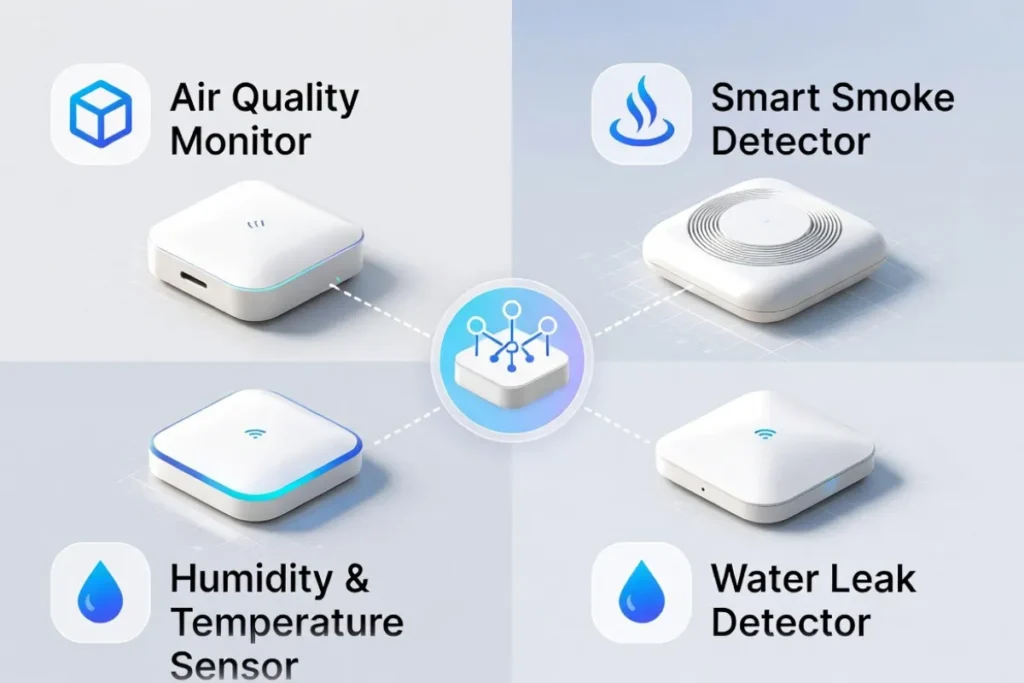
Smart Air Quality Monitors
Air quality monitors track pollutants that affect indoor air health, including particulate matter, volatile organic compounds (VOCs), and carbon dioxide.
The Airthings Wave Plus is maybe the potential device from Airthings. This monitor measures several environmental indicators such as:
- radon levels
- CO₂ concentration
- VOC pollution
- temperature and humidity
The device connects to a smartphone app where users can view real-time air quality readings and long-term environmental trends.
Another well-known option is the Eve Room developed by Eve Systems. It monitors air quality, temperature, and humidity while supporting the smart home ecosystem used by Apple.
These devices help homeowners identify pollution sources and improve ventilation to maintain healthier indoor air.
Smart Smoke and Carbon Monoxide Detectors
Safety sensors that detect smoke and carbon monoxide are essential components of environmental monitoring systems.
A widely used smart detector is the Nest Protect developed by Google Nest.
This device provides several advanced features:
- voice alerts that describe the type of danger
- smartphone notifications
- self-testing sensors
- integration with smart home automation systems
Instead of relying only on loud alarms, smart detectors notify homeowners through mobile apps when dangerous conditions are detected.
This remote alert capability is especially useful when homeowners are away from home.
Smart Temperature and Humidity Sensors
Temperature and humidity sensors help maintain comfortable indoor conditions and prevent moisture-related problems.
Devices such as the Eve Weather measure environmental conditions and send the data directly to mobile apps or smart home hubs.
These sensors allow homeowners to monitor environmental conditions across multiple rooms. By comparing readings from different locations, users can identify:
- poorly ventilated areas
- rooms with uneven heating or cooling
- locations where humidity levels are too high
Maintaining balanced temperature and humidity levels improves both comfort and energy efficiency.
Smart Water Leak Detectors
Water damage is one of the most common and expensive home repair problems. Smart leak detectors help homeowners identify leaks early before significant damage occurs.
A widely used device is the Aqara Water Leak Sensor developed by Aqara.
These small sensors are typically placed:
- under sinks
- near washing machines
- beside water heaters
- near basement floors
If water touches the sensor probes, the device immediately sends an alert to the homeowner’s smartphone. Some systems can also trigger automation actions, such as shutting off the main water supply.
Smart Home Environmental Monitoring Platforms
While sensors collect environmental data, smart home platforms help manage and automate the entire system.
Several widely used ecosystems support environmental monitoring devices.
The Google Home platform allows users to connect compatible sensors, thermostats, and air quality monitors into a single control interface.
Similarly, Amazon Alexa enables users to manage sensors and create automation routines based on environmental conditions.
For homes built around the Apple HomeKit ecosystem, compatible sensors can integrate into the Home app and trigger automated responses.
Using a centralized smart home platform simplifies device management and improves the overall environmental monitoring experience.
Factors to Consider When Choosing Devices
When selecting environmental monitoring devices, homeowners should evaluate several key factors.
Sensor accuracy
High-quality sensors provide more reliable environmental readings.
Connectivity compatibility
Devices should support communication protocols that work with the existing smart home ecosystem.
Battery life
Long battery life reduces maintenance requirements.
Mobile app functionality
User-friendly apps allow homeowners to easily monitor environmental data and configure alerts.
Automation support
Devices that integrate with smart home automation platforms provide more flexibility.
By choosing compatible devices and platforms, homeowners can build a scalable environmental monitoring network that grows with their smart home system.
Common Challenges in Smart Home Environmental Monitoring
While smart home environmental monitoring provides valuable insights into indoor conditions, homeowners may encounter several practical challenges when installing and operating these systems. Understanding these challenges helps users design more reliable monitoring setups and interpret environmental data correctly.
Environmental monitoring systems rely on sensor accuracy, network connectivity, and correct installation. If any of these elements are misconfigured or poorly maintained, the monitoring results may become unreliable or misleading.
Recognizing these limitations allows homeowners to build monitoring systems that deliver meaningful environmental insights.
Sensor Accuracy and Calibration
Environmental sensors are designed to detect small variations in air composition, temperature, humidity, and other environmental parameters. However, sensor readings can sometimes drift over time.
Several factors may influence measurement accuracy:
- long-term sensor aging
- exposure to dust or airborne particles
- high humidity environments
- manufacturing tolerance differences
For example, particulate matter sensors used in indoor air monitors may gradually accumulate dust on optical components, which can slightly alter readings.
To maintain accurate monitoring results, homeowners should:
- periodically clean air sensor intake areas
- update device firmware when available
- recalibrate sensors when supported by the manufacturer
Regular maintenance ensures that environmental data remains consistent and reliable.
Incorrect Sensor Placement
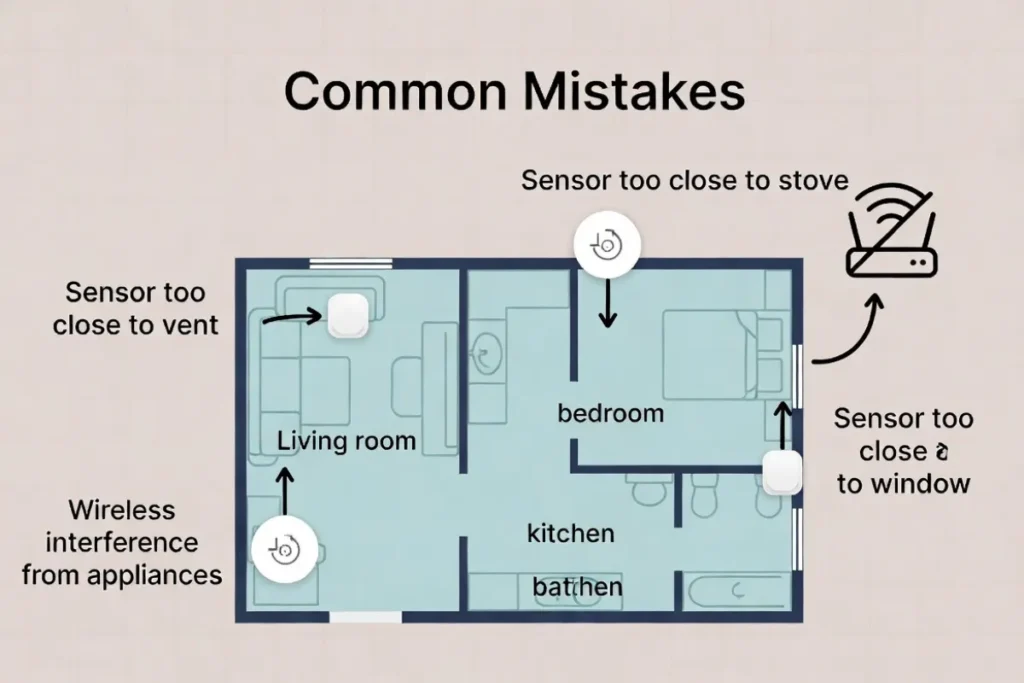
Improper sensor placement is one of the most common causes of misleading environmental readings.
Sensors measure conditions at their immediate location. If they are placed too close to environmental sources or airflow paths, readings may not represent the actual conditions of the room.
Examples of problematic placements include:
- air quality sensors near cooking stoves
- humidity sensors directly beside showers
- temperature sensors next to heating vents
- leak detectors positioned above the floor level
These placements may produce exaggerated readings that do not accurately reflect the overall indoor environment.
To improve monitoring reliability, sensors should generally be placed:
- at breathing height for air quality monitoring
- away from direct airflow or heat sources
- in areas that represent average room conditions
Correct placement allows environmental sensors to capture more meaningful data.
Wireless Connectivity Limitations
Environmental monitoring systems rely on wireless communication between sensors, hubs, and mobile applications. In some homes, connectivity issues may interrupt this communication.
Common causes of signal disruption include:
- thick walls or concrete structures
- long distances between devices
- interference from other wireless networks
If sensor signals cannot reach the hub or router reliably, environmental data may be delayed or temporarily unavailable.
Homeowners can improve connectivity by:
- placing hubs in central locations
- using mesh networking protocols when possible
- ensuring sensors remain within recommended signal ranges
Reliable connectivity ensures that monitoring systems deliver real-time environmental data and alerts.
Data Interpretation Challenges
Environmental monitoring systems often present users with continuous streams of data. While this information is valuable, interpreting the data correctly can sometimes be challenging.
For example, homeowners may observe sudden spikes in particulate matter readings without understanding the cause. In many cases, these spikes may result from normal household activities such as cooking or vacuuming.
Similarly, temporary humidity increases may occur during showers or rainy weather.
Instead of reacting to every short-term change, it is more useful to observe long-term environmental trends. Trend analysis can reveal recurring patterns that indicate structural or ventilation issues.
Many monitoring platforms display historical charts and environmental summaries to help users better understand these patterns.
Device Compatibility and Ecosystem Fragmentation
Smart home ecosystems are evolving rapidly, and not all environmental sensors are compatible with every smart home platform.
Some devices operate only within specific ecosystems or require proprietary hubs to function.
This fragmentation can create challenges when homeowners attempt to integrate multiple devices into a single monitoring dashboard.
Before purchasing sensors, users should verify:
- supported communication protocols
- compatibility with existing smart home platforms
- available mobile apps or dashboards
Selecting compatible devices from the beginning simplifies system management and reduces integration issues.
Privacy and Data Security Considerations
Environmental monitoring systems often collect continuous data about indoor conditions. Although this data primarily relates to environmental measurements, it may still reveal patterns about household activity.
For example:
- occupancy patterns may influence carbon dioxide levels
- appliance usage may affect temperature readings
- ventilation cycles may appear in humidity trends
Because environmental data may be stored in cloud services, homeowners should evaluate device security features.
Important security considerations include:
- encrypted data transmission
- secure cloud storage
- account authentication options
- firmware update availability
Choosing systems that prioritize security helps protect environmental monitoring data from unauthorized access.
Future Developments in Smart Home Environmental Monitoring
Smart home environmental monitoring continues to evolve as sensor technology, wireless communication, and data analytics improve. Early monitoring systems primarily focused on simple measurements such as temperature or humidity. Newer systems are expanding toward continuous environmental analysis, predictive insights, and automated home responses.
These developments are gradually transforming environmental monitoring from a passive observation tool into an active component of home health management.
As technology advances, monitoring systems are expected to become more integrated with home infrastructure, enabling homes to respond dynamically to environmental changes.
Artificial Intelligence for Environmental Pattern Analysis
Modern environmental monitoring platforms increasingly rely on artificial intelligence to analyze large volumes of environmental data collected by sensors.
Instead of simply displaying real-time measurements, advanced monitoring systems analyze patterns over time to identify environmental behaviors that might otherwise go unnoticed.
For example, AI-driven systems may detect patterns such as:
- recurring humidity spikes during certain times of day
- seasonal changes in indoor air quality
- gradual increases in particulate matter levels
- ventilation patterns linked to occupancy
These insights help homeowners understand why environmental conditions change, not just when they change.
Machine learning models may also help identify subtle environmental risks before they become noticeable.
Predictive Environmental Monitoring
Another emerging development is predictive environmental monitoring. Instead of reacting to environmental issues after they occur, predictive systems aim to anticipate potential problems.
Predictive monitoring systems analyze historical environmental data to forecast potential conditions such as:
- rising indoor humidity that may promote mold growth
- declining air quality during seasonal pollution events
- overheating patterns in poorly ventilated rooms
By identifying early warning signs, predictive monitoring can help homeowners take preventive actions before conditions worsen.
This approach shifts environmental monitoring from reactive detection to proactive prevention.
Integration With Smart Ventilation and HVAC Systems
Environmental monitoring systems are increasingly connected to home ventilation and climate control systems.
Sensors can provide real-time environmental feedback to heating, ventilation, and air conditioning equipment. This allows HVAC systems to adjust automatically based on indoor environmental conditions.
Examples of automated responses may include:
- increasing ventilation when carbon dioxide levels rise
- activating air filtration during elevated particulate matter readings
- reducing humidity through dehumidification cycles
- adjusting airflow to maintain balanced indoor temperatures
This integration enables homes to maintain healthier environmental conditions with minimal manual intervention.
Environmental monitoring data may also help HVAC systems operate more efficiently by responding to actual environmental needs rather than fixed schedules.
Expansion of Multi-Sensor Monitoring Networks
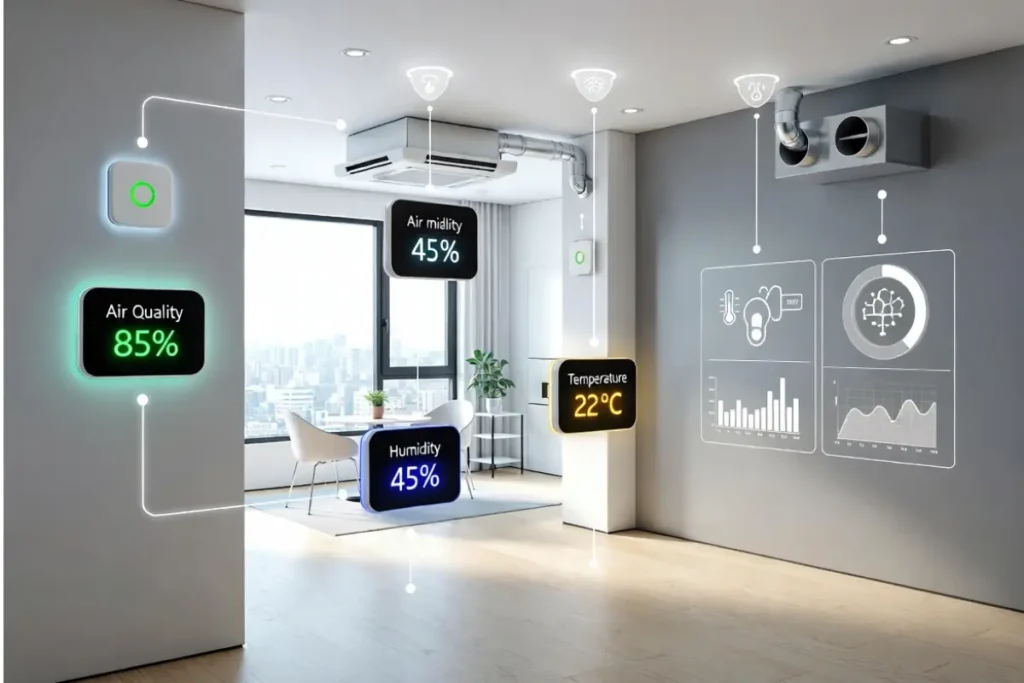
Early smart home monitoring systems often relied on a single device placed in a central location. However, environmental conditions can vary significantly across different areas of a home.
Future monitoring systems are moving toward distributed sensor networks that measure conditions across multiple rooms simultaneously.
A network of sensors may monitor:
- bedrooms
- kitchens
- basements
- attics
- living areas
By comparing environmental conditions across multiple locations, homeowners can better identify localized environmental issues such as poor ventilation or moisture accumulation.
Distributed monitoring provides a more complete environmental profile of the entire home.
Edge Computing and Local Data Processing
Many smart home devices currently rely on cloud-based systems to analyze environmental data. However, new developments in edge computing allow environmental monitoring devices to process data locally.
Local processing can provide several advantages:
- faster response times
- reduced reliance on internet connectivity
- improved data privacy
- lower cloud storage requirements
In edge-based systems, environmental sensors analyze data directly within the home network before sending summarized information to cloud services.
This hybrid architecture allows monitoring systems to maintain functionality even during temporary internet outages.
Integration With Broader Smart Home Ecosystems
Environmental monitoring is becoming a central component of broader smart home ecosystems.
Instead of functioning as standalone devices, environmental sensors can now interact with multiple home systems, including:
- smart thermostats
- air purification systems
- ventilation equipment
- window automation systems
For example, if indoor carbon dioxide levels rise, a smart home system may automatically trigger actions such as opening motorized windows or increasing ventilation airflow.
These interconnected systems create adaptive indoor environments that respond continuously to changing conditions.
Frequently Asked Questions About Smart Home Environmental Monitoring
What is smart home environmental monitoring?
Smart home environmental monitoring refers to the use of connected sensors and digital systems that measure indoor environmental conditions in real time.
These systems typically monitor factors such as:
- air quality
- temperature
- humidity
- carbon dioxide levels
- smoke or carbon monoxide
- water leaks
Sensors collect environmental data continuously and transmit the information to mobile applications or home automation systems. This allows homeowners to observe environmental conditions and receive alerts when unusual changes occur.
Environmental monitoring helps homeowners better understand indoor conditions and identify potential issues affecting comfort, safety, or indoor air quality.
Why is environmental monitoring important inside homes?
Indoor environments can contain pollutants and conditions that affect health, comfort, and building integrity.
Environmental monitoring provides visibility into factors that are often invisible or difficult to detect without specialized equipment.
Examples include:
- elevated humidity levels that may encourage mold growth
- carbon dioxide buildup in poorly ventilated rooms
- particulate matter from cooking or outdoor pollution
- hidden water leaks beneath appliances or plumbing fixtures
Monitoring these conditions allows homeowners to recognize environmental changes early and take appropriate action when needed.
What environmental factors can smart home sensors measure?
Environmental monitoring sensors can measure a wide range of indoor conditions depending on the device design.
Common measurements include:
- temperature
- relative humidity
- particulate matter (PM2.5 or PM10)
- volatile organic compounds (VOCs)
- carbon dioxide (CO₂)
- smoke and carbon monoxide
- water presence or leaks
Some advanced sensors combine multiple measurements within a single device, providing a more comprehensive view of indoor environmental conditions.
Where should environmental sensors be placed inside a home?
Sensor placement plays an important role in collecting meaningful environmental data.
Air quality sensors are generally placed:
- at breathing height
- away from direct airflow
- away from windows or vents
Humidity sensors may be placed in areas where moisture accumulation is possible, such as bathrooms, basements, or laundry rooms.
Leak detection sensors are typically positioned near:
- washing machines
- water heaters
- sinks
- basement floors
Proper placement helps sensors represent average environmental conditions rather than localized extremes.
Do environmental monitoring devices require a central hub?
Some environmental monitoring devices communicate directly with home Wi-Fi networks, while others rely on a central hub or gateway.
Hub-based systems often use low-power communication protocols that allow sensors to operate for long periods on battery power.
These hubs act as intermediaries between sensors and cloud services or mobile applications.
Homeowners should verify compatibility between sensors and their existing smart home platforms before installing new devices.
Can smart home monitoring systems send alerts?
Most environmental monitoring systems provide automated notifications when environmental conditions move outside normal ranges.
Examples of alerts may include:
- sudden increases in particulate matter
- rising carbon dioxide levels
- abnormal humidity levels
- smoke or carbon monoxide detection
- water leak detection
Notifications are typically delivered through mobile applications or smart home platforms, allowing homeowners to respond even when they are away from home.
How accurate are smart home environmental sensors?
Consumer-grade environmental sensors are generally designed for trend monitoring rather than laboratory-level measurement precision.
Most sensors provide readings that are accurate enough to detect environmental changes or patterns over time.
However, factors such as sensor placement, calibration, and environmental conditions can influence measurement accuracy.
Regular maintenance and proper placement help maintain consistent monitoring results.
Do environmental sensors require regular maintenance?
Most smart home environmental sensors require minimal maintenance, but periodic checks help ensure reliable operation.
Recommended maintenance practices include:
- replacing batteries when required
- keeping sensor air inlets clean
- updating device firmware
- confirming that sensors remain connected to the network
Routine maintenance ensures that environmental monitoring systems continue providing accurate and consistent data.
Can environmental monitoring systems improve indoor air quality?
Environmental monitoring systems do not directly change indoor conditions, but they provide data that helps homeowners make informed decisions.
For example, monitoring systems may reveal:
- poor ventilation patterns
- recurring humidity increases
- elevated pollutant levels during certain activities
With this information, homeowners can adjust ventilation, filtration, or humidity control systems to maintain healthier indoor conditions.
Environmental monitoring therefore supports informed environmental management rather than direct environmental control.
Are environmental monitoring systems compatible with smart home automation?
Many environmental sensors can integrate with smart home automation platforms.
When connected to automation systems, environmental data can trigger automated responses such as:
- activating air purification systems
- increasing ventilation
- adjusting thermostat settings
- triggering humidity control equipment
These automated responses help maintain stable indoor conditions with minimal manual intervention.