Air Quality: Understanding Indoor Air and How to Improve It at Home
Why Indoor Air Quality Matters Today
Most people think about air pollution as something that happens outdoors—on busy roads, in industrial areas, or during wildfire season. Yet the air inside homes often deserves equal attention. In the United States and many other countries, people spend the majority of their time indoors—sleeping, working, studying, and relaxing. The quality of indoor air therefore plays a quiet but significant role in daily comfort and long-term well-being.
Modern homes are designed to be more energy-efficient than ever before. Improved insulation, sealed windows, and tighter construction help reduce heating and cooling costs. However, these same features can also limit natural airflow. When air exchange is reduced, pollutants generated indoors may accumulate rather than disperse.
Indoor air can be influenced by many factors: building materials, furnishings, cleaning products, cooking activities, humidity levels, ventilation systems, and outdoor pollution that enters the home. In certain regions of the U.S., seasonal patterns such as winter heating, summer humidity, or wildfire smoke can further shape indoor conditions. Similar patterns exist globally, depending on climate and urban density.
Unlike visible dust on a surface, air quality is often invisible. A home may appear clean while still containing airborne particles, moisture imbalances, or chemical compounds that affect overall comfort. Because of this, understanding indoor air quality begins with awareness rather than assumptions.
This pillar explores the fundamentals of indoor air quality—what it is, what influences it, how it is evaluated, and how conditions can be responsibly improved. Before choosing any solution, it is essential to understand the environment itself.
What Is Indoor Air Quality? (IAQ Basics)
Indoor Air Quality (IAQ) refers to the condition of the air inside homes and other enclosed spaces, especially as it relates to comfort, cleanliness, and overall environmental balance. It is not defined by a single measurement. Instead, it reflects the combined effects of multiple factors interacting within a building.
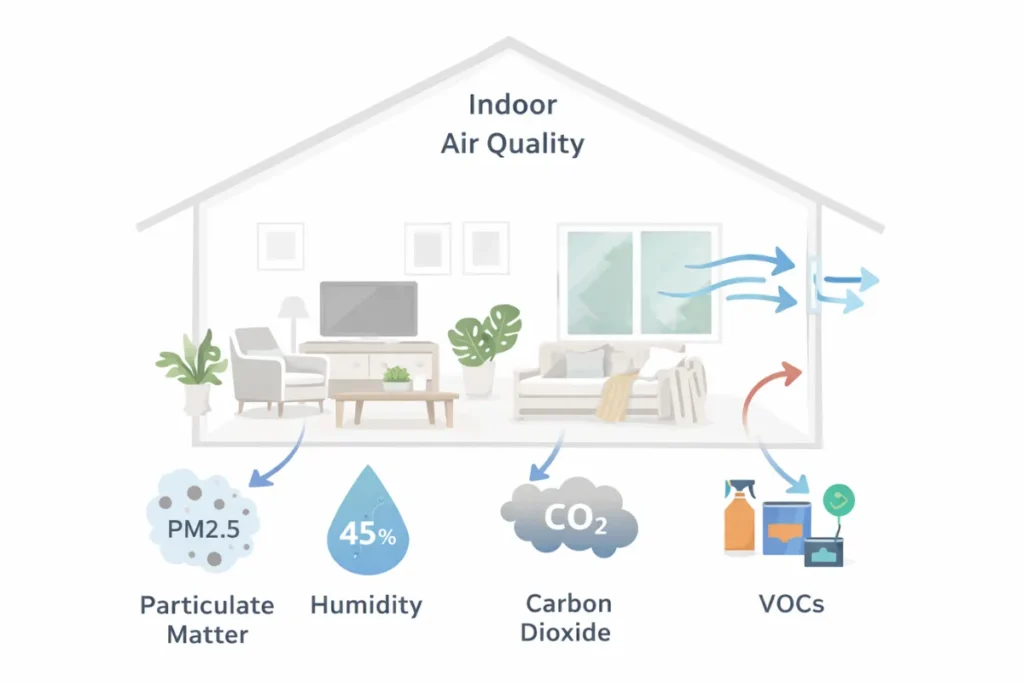
At its core, indoor air quality is shaped by three primary elements:
1. Airborne Pollutants – Particles or gases present in the air, which may originate indoors or enter from outside.
2. Humidity Levels – The amount of moisture in the air, which influences both comfort and building conditions.
3. Ventilation and Airflow – How effectively indoor air is refreshed or exchanged with outdoor air.
Temperature also plays a supporting role, as it interacts with humidity and airflow to influence perceived comfort.
It is important to distinguish indoor air quality from outdoor air pollution. Outdoor air quality is typically monitored at the city or regional level and influenced by traffic, industry, and weather patterns. Indoor air quality, however, varies from one home to another—even within the same neighborhood. Two houses side by side may have very different indoor conditions depending on ventilation design, occupant habits, moisture control, and building materials.
Another key point is that indoor air quality is not solely about visible dust or noticeable odors. Some pollutants are microscopic. Others may not produce immediate sensory cues. This is why IAQ is best understood as an environmental system rather than a single problem to fix.
In practical terms, good indoor air quality means that the air inside a home:
- Feels fresh rather than stale
- Maintains balanced humidity
- Does not trap excessive pollutants
- Supports consistent comfort across rooms
Understanding these basics creates the foundation for evaluating what affects air inside a home—and how those conditions can change over time.
Read our full guide of Water Quality & Drinking Water Safety
What Affects Indoor Air Quality in Homes?
Indoor air quality is shaped by a combination of environmental, structural, and behavioral factors. Unlike outdoor air, which is influenced largely by regional conditions, indoor air is affected by what happens inside a specific home—along with how that home interacts with the outdoor environment.
Understanding these influencing factors helps explain why air quality can vary dramatically between households, even within the same city.
Indoor Air Pollutants
Indoor air pollutants are substances in the air that may affect comfort or environmental quality. They typically fall into three broad categories: biological, chemical, and combustion-related.
Biological Contaminants
These originate from living organisms or organic materials. Common examples include:
- Mold spores
- Dust mites
- Pet dander
- Bacteria
- Pollen that enters from outdoors
Biological particles tend to increase in environments with excess moisture or poor ventilation. Damp basements, bathrooms without exhaust systems, and humid climates can encourage microbial growth. Even everyday activities—like cooking or showering—add moisture to indoor air.
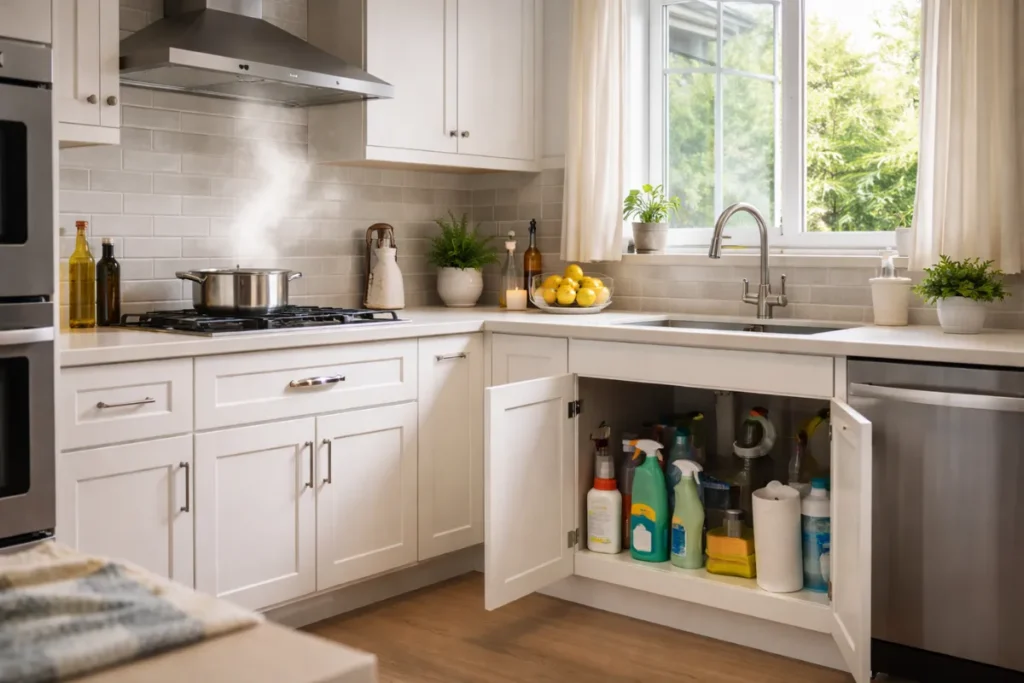
Chemical Pollutants
Chemical contaminants are often released from household materials and products. These may include:
- Volatile organic compounds (VOCs) from paints, adhesives, or furnishings
- Cleaning product fumes
- Air fresheners
- Off-gassing from new carpets or pressed wood furniture
Many modern building materials are engineered for durability and efficiency, but some can emit low levels of airborne compounds over time. Concentrations may be higher in newly renovated or newly constructed homes.
Combustion Pollutants
Combustion-related pollutants are produced when fuels are burned. Sources may include:
- Gas stoves
- Fireplaces
- Furnaces
- Attached garages
- Tobacco smoke
Inadequate ventilation or improperly maintained appliances can increase indoor concentrations of combustion byproducts. For this reason, functional exhaust systems and properly installed detectors are considered important components of a safe indoor environment.
Radon: A Naturally Occurring Soil Gas
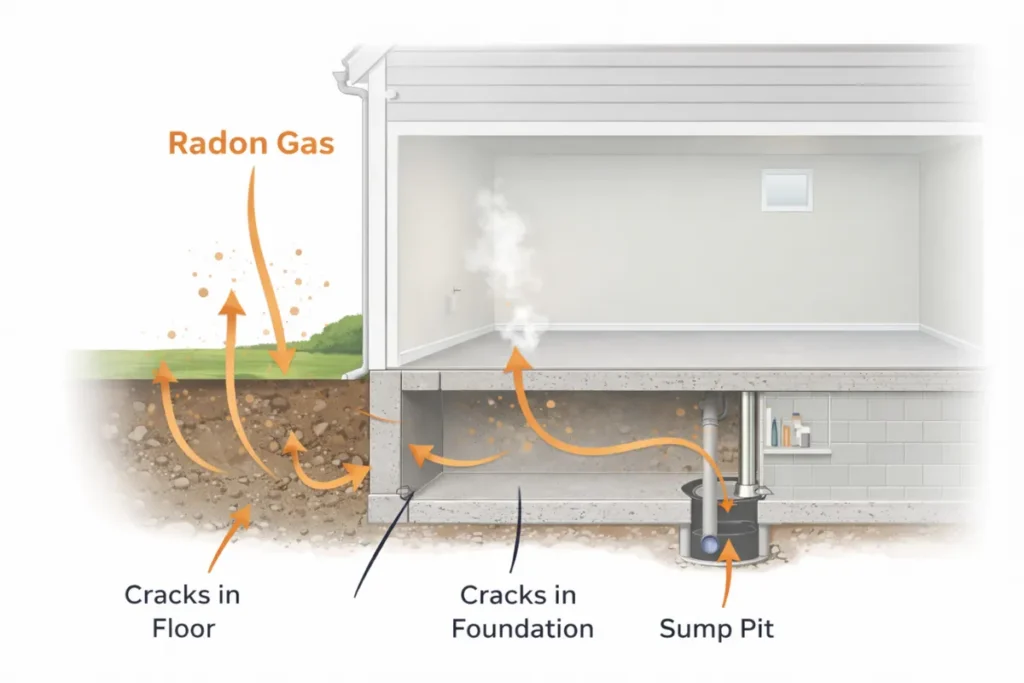
Radon is a colorless, odorless radioactive gas that forms naturally from the breakdown of uranium in soil and rock. It can enter homes through foundation cracks, sump pits, crawl spaces, and other openings in contact with the ground. Because it has no immediate smell or irritation effect, elevated levels often go unnoticed without testing.
Unlike pollutants generated indoors, radon originates from the soil beneath a building. Concentrations vary significantly by geographic region, soil composition, and construction type. Basements and ground-level living areas are typically more affected than upper floors.
Testing is the only reliable way to determine radon levels in a home. Long-term exposure risk depends on concentration and duration, which is why regional awareness and appropriate testing are often emphasized in residential environmental guidance.
Outdoor Pollution That Enters the Home
Outdoor air and indoor air are connected. Pollutants such as:
- Fine particulate matter (PM2.5)
- Traffic-related emissions
- Industrial pollution
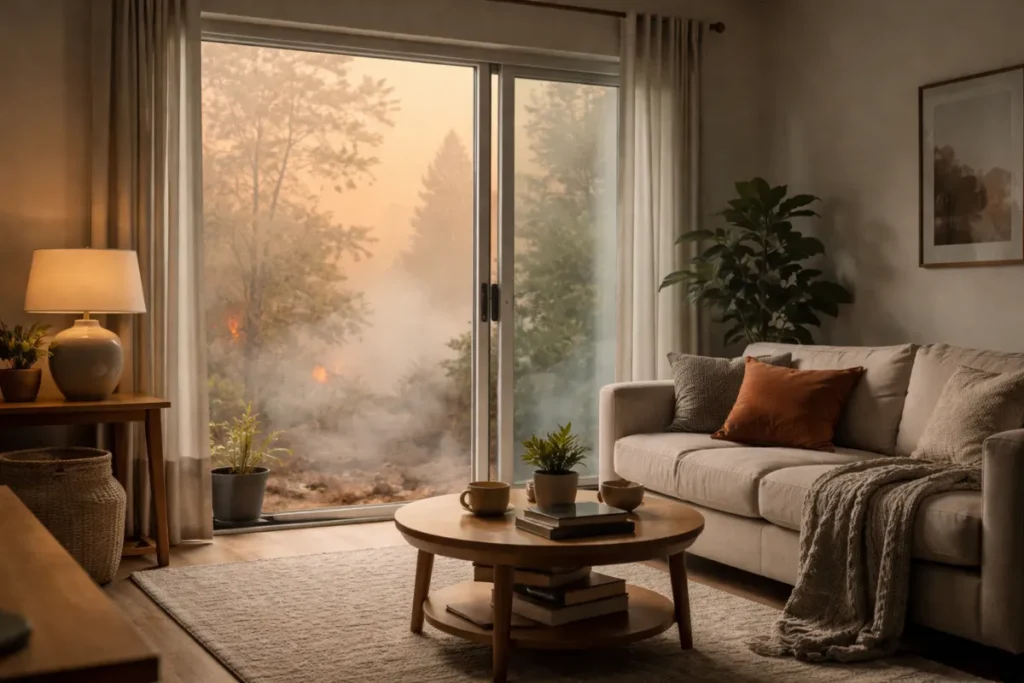
- Wildfire smoke
can infiltrate homes through windows, doors, and ventilation systems. In certain U.S. regions, seasonal events—such as wildfire smoke in the West or high pollen counts in the Southeast—can significantly influence indoor conditions.
Even in well-sealed homes, complete isolation from outdoor air is neither possible nor desirable. The key is balanced air exchange.
Humidity and Moisture Balance
Moisture levels strongly influence indoor air quality. Air that is too dry or too humid can create environmental imbalances.
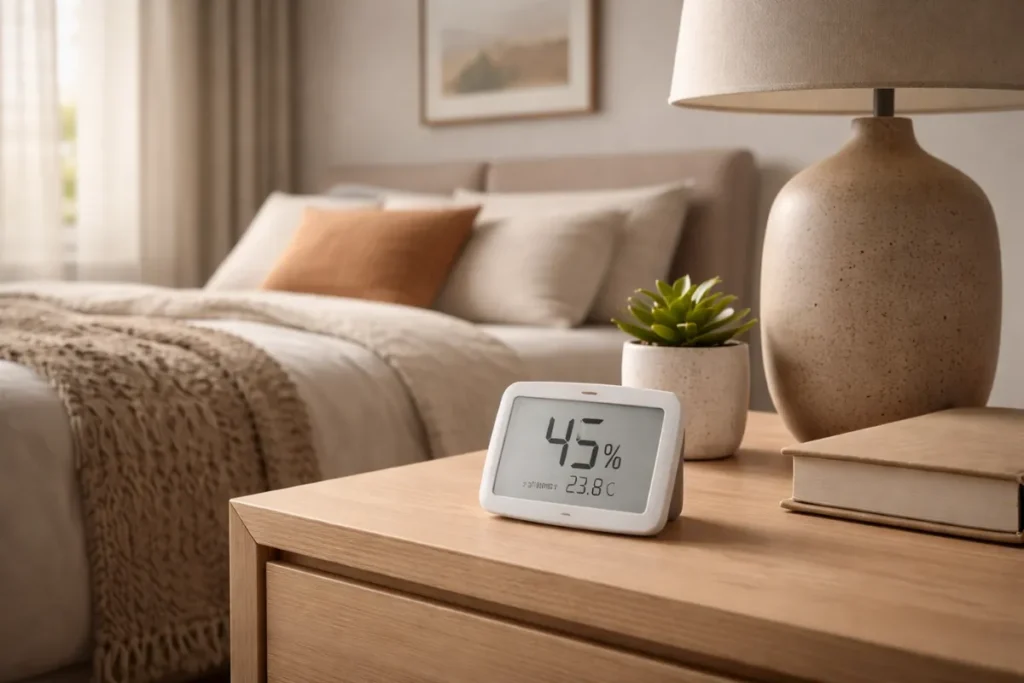
In general, indoor relative humidity between 30% and 50% is commonly considered a comfortable range for many homes. Conditions outside this range may lead to:
- Dry indoor air during winter heating seasons
- Excess humidity during summer months
- Increased condensation on windows
- Greater potential for mold growth in persistently damp areas
Climate plays a major role. Homes in humid coastal regions face different challenges than homes in arid western states. Building design, insulation quality, and occupant habits (such as cooking frequency or use of exhaust fans) also affect indoor moisture levels.
Managing humidity is not only about comfort—it also protects building materials, reduces condensation, and supports balanced air conditions.
Ventilation and Air Exchange
Ventilation refers to the process of replacing indoor air with outdoor air. Without adequate air exchange, pollutants generated inside the home can accumulate.
There are three general types of ventilation:
Natural ventilation – Air movement through open windows, doors, and passive airflow.
Mechanical ventilation – Systems that use fans or ducts to move air in and out.
Localized ventilation – Exhaust fans in kitchens or bathrooms that remove moisture and odors at the source.
Modern energy-efficient homes are often more airtight than older homes. While this improves temperature control, it can reduce natural air leakage that once helped dilute indoor pollutants. As a result, intentional ventilation strategies become more important.
The goal is not constant airflow, but appropriate air exchange that maintains balance without compromising energy efficiency.

Explore our Water Quality guide.
Common Signs of Poor Indoor Air Quality
Indoor air quality does not always decline in obvious ways. In many cases, changes are gradual and easy to overlook. Because air is invisible, early indicators often appear as comfort shifts rather than visible contamination.
Recognizing common patterns can help homeowners identify when closer evaluation may be worthwhile.
Persistent or Unusual Odors
Lingering smells that do not dissipate—such as musty, stale, or chemical-like odors—can signal limited ventilation or the presence of airborne compounds. While occasional odors from cooking or cleaning are normal, persistent smells may indicate that air is not circulating effectively.
Stale or Stuffy Air
A home that feels heavy or lacks freshness may reflect insufficient air exchange. In tightly sealed buildings, indoor air can feel stagnant if fresh outdoor air is not regularly introduced in a controlled way.
Excess Dust Accumulation
Frequent dust buildup on surfaces may suggest high particulate presence in the air. While dust is common in all homes, rapid accumulation despite regular cleaning may indicate airflow imbalances or filtration limitations.
Condensation on Windows or Walls
Moisture forming on glass or colder surfaces can be a sign of elevated indoor humidity. Persistent condensation, especially in winter, may contribute to damp conditions over time.
Uneven Comfort Between Rooms
If certain rooms consistently feel more humid, dry, or stuffy than others, airflow distribution may be uneven. Poor circulation can allow pollutants or moisture to concentrate in specific areas.
Seasonal Pattern Changes
Some indoor air concerns appear only during specific times of the year:
- Winter heating can lead to excessively dry air
- Summer humidity can increase dampness
- Wildfire season may introduce smoke particles indoors
- High pollen seasons may affect indoor comfort
Observing when issues occur can help differentiate between temporary environmental factors and ongoing ventilation or moisture challenges.
It is important to note that these signs do not automatically confirm a serious problem. They simply indicate that further evaluation may be beneficial. Indoor air quality should be approached methodically—observing conditions before attempting solutions.
Learn from our Smart Home Environmental Monitoring guide
Health and Comfort Considerations
Indoor air quality is closely linked to how a home feels on a daily basis. While air conditions vary widely from one household to another, research from environmental and public health agencies consistently shows that indoor environments influence both comfort and overall well-being.
It is important, however, to approach this topic responsibly. Indoor air quality does not automatically translate into illness. Instead, air conditions may contribute to discomfort or irritation, particularly when pollutants accumulate or humidity levels remain unbalanced over time.
Short-Term Comfort Effects
When ventilation is limited or pollutant levels increase, some individuals may notice temporary environmental discomfort such as:
- Eye or throat irritation
- Dry skin during heating season
- Headaches in poorly ventilated spaces
- Fatigue in stuffy rooms
These effects are often influenced by multiple factors, including temperature, airflow, and individual sensitivity. Improving ventilation and maintaining balanced humidity frequently improves perceived comfort.
Long-Term Environmental Exposure
Long-term exposure to certain indoor pollutants has been studied extensively by environmental health organizations. Damp indoor environments, for example, have been associated with respiratory discomfort in some populations. Similarly, prolonged exposure to combustion byproducts or high particulate levels may contribute to reduced indoor environmental quality.
The degree of impact varies depending on concentration, duration of exposure, and overall home conditions. This is why environmental assessment focuses on patterns rather than isolated incidents.
Sensitive Groups
Some individuals may be more responsive to indoor air conditions than others. These groups can include:
- Children
- Older adults
- Individuals with existing respiratory sensitivities
- People who spend extended periods indoors
For example, damp environments and airborne particles may influence comfort levels for those with asthma or allergies. Maintaining balanced indoor air conditions is therefore often part of broader environmental management in homes with sensitive occupants.
Comfort vs. Safety
It is useful to distinguish between general air quality comfort and specific safety concerns. Comfort-related issues often involve ventilation, humidity, or airborne particulates. Safety concerns typically involve combustion gases such as carbon monoxide, which require properly installed and maintained detection systems.
Both are part of responsible indoor environmental management, but they are addressed differently.
Understanding the relationship between indoor air quality and comfort helps frame the next logical step: evaluation. Before attempting improvements, it is essential to understand how air conditions are assessed.
Sick Building Syndrome and Indoor Environments
The term “Sick Building Syndrome” is sometimes used to describe situations in which building occupants experience temporary discomfort believed to be linked to time spent indoors, without a specific identifiable illness. Symptoms may include irritation, fatigue, or difficulty concentrating that improve after leaving the environment.
While the term does not refer to a formal medical diagnosis, it is often associated with inadequate ventilation, pollutant accumulation, or imbalanced indoor environmental conditions. The concept highlights the importance of airflow, moisture management, and pollutant control in shared indoor spaces.
Addressing underlying environmental factors typically resolves concerns more effectively than focusing on a single isolated source.
How Indoor Air Quality Is Evaluated
Improving indoor air quality begins with understanding current conditions. Rather than assuming a problem exists—or attempting random solutions—evaluation provides clarity. In many cases, simple observations combined with basic measurements offer meaningful insight.
Indoor air quality assessment does not always require complex laboratory testing. For most homes, a structured approach is sufficient.
Observation and Environmental Clues
The first step in evaluating air quality is careful observation. Homes often provide subtle indicators of environmental imbalance.
Consider:
- Moisture patterns – Recurring condensation on windows, damp basement areas, or musty smells may indicate excess humidity.
- Ventilation habits – Are kitchen and bathroom exhaust fans used consistently? Are windows ever opened for natural air exchange?
- Seasonal variation – Does the home feel significantly drier in winter or more humid in summer?
- Room-to-room differences – Are certain spaces consistently stuffy or uncomfortable?
Tracking when and where changes occur helps identify patterns rather than isolated incidents. For example, a home may only feel stale during winter months when windows remain closed and heating systems run continuously.
Observation establishes context before any tools are used.
Measuring Indoor Conditions
After observation, measurement can provide objective data. Several basic indicators are commonly used in residential environments:
Humidity Monitoring
A hygrometer measures indoor relative humidity. Maintaining levels generally within the 30–50% range helps balance comfort and moisture control. Persistent readings above or below this range may suggest a need for adjustments in ventilation or moisture management.
Particulate Monitoring
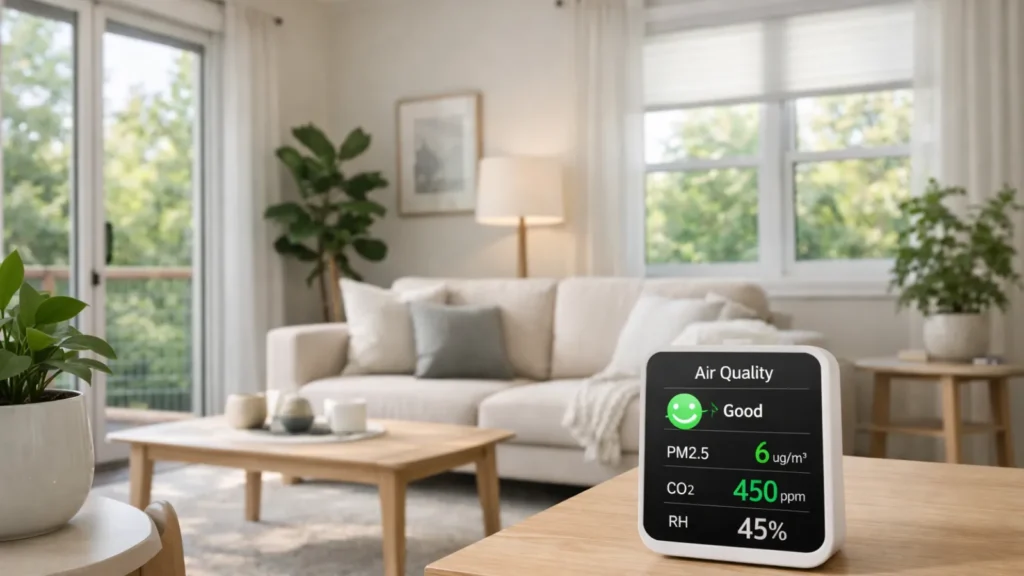
Air quality monitors can detect airborne particles such as fine particulate matter (often referred to as PM2.5). These particles may originate from cooking, smoke, outdoor pollution, or other sources. Observing how particle levels change during daily activities can reveal contributing factors.
Understanding What Air Quality Monitors Measure
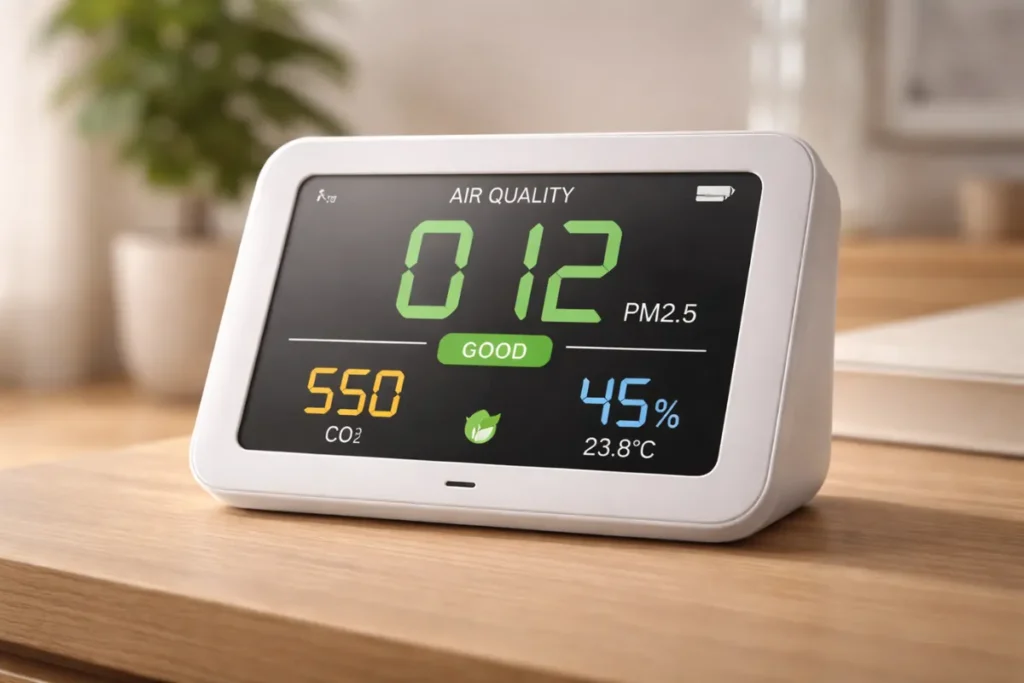
Consumer air quality monitors typically measure fine particulate matter (such as PM2.5), temperature, and relative humidity. Some models also estimate levels of volatile organic compounds (VOCs) using chemical sensors.
PM2.5 refers to particles small enough to penetrate deep into the respiratory system. These particles may originate from cooking, smoke, outdoor pollution, or certain indoor activities. Monitor readings often fluctuate throughout the day depending on occupancy and ventilation patterns.
It is important to recognize that consumer-grade monitors provide general trend data rather than laboratory-grade precision. Their value lies in identifying patterns — such as increased particle levels during cooking or elevated humidity after showers — which can guide targeted adjustments.
Monitoring supports awareness, not alarm. Observing consistent patterns over time is often more meaningful than reacting to short-term spikes.
Carbon Monoxide Detection
Carbon monoxide alarms are a safety essential in homes with combustion appliances. Unlike general air quality monitoring, these detectors are specifically designed to alert occupants to potentially dangerous concentrations.
Ventilation Assessment
While more technical ventilation analysis may require professional evaluation, homeowners can begin by assessing airflow:
- Are air returns blocked?
- Are filters replaced regularly?
- Do exhaust systems remove moisture effectively?
Understanding airflow patterns often explains why certain areas accumulate dust or feel stagnant.
Understanding Air Exchange Rate (Air Changes per Hour)
Air exchange rate, often measured as Air Changes per Hour (ACH), describes how many times the air inside a home is replaced within one hour. For example, an ACH of 0.5 means that half of the indoor air volume is replaced every hour through ventilation or natural leakage.
Older homes often have higher natural air exchange due to less airtight construction. In contrast, newer energy-efficient homes are typically more tightly sealed, which reduces uncontrolled air leakage but also limits passive ventilation. In these environments, mechanical ventilation systems are often necessary to maintain consistent air replacement.
Balanced air exchange helps dilute indoor pollutants while preserving energy performance. Too little exchange can allow contaminants to accumulate; too much uncontrolled exchange can reduce comfort and efficiency.
Considering Outdoor Influence
Indoor air does not exist in isolation. Outdoor conditions influence indoor environments, especially during:
- High pollen seasons
- Urban pollution peaks
- Wildfire events
- Extreme humidity or drought conditions
Monitoring outdoor air reports and comparing them with indoor conditions can clarify whether issues originate inside the home or from external sources.
Evaluation is not about confirming a problem—it is about understanding patterns. With clear information, improvements can be targeted and balanced rather than reactive.
Our Smart-Home pillar may help you.
How to Improve Indoor Air Quality at Home
Improving indoor air quality is rarely about a single device or quick fix. In most homes, meaningful improvement comes from combining several small, consistent adjustments. The goal is balance—reducing pollutant buildup, maintaining appropriate moisture levels, and ensuring steady airflow.
Environmental agencies commonly emphasize three foundational strategies: source control, ventilation, and air cleaning. When applied thoughtfully, these approaches work together.
Source Control: Addressing Pollution at Its Origin
Source control is often the most effective and practical first step. Instead of trying to remove pollutants after they accumulate, this approach focuses on limiting what enters the air in the first place.
Examples include:
- Avoiding indoor smoking
- Properly storing paints, solvents, and chemicals
- Choosing low-emission building or furnishing materials when possible
- Using kitchen exhaust fans while cooking
- Maintaining combustion appliances regularly
Attached garages are another important consideration. Vehicle exhaust and stored fuels can introduce pollutants into living spaces if separation and ventilation are inadequate.
By reducing emissions at the source, overall air burden decreases before ventilation or filtration becomes necessary.
Improving Ventilation and Air Exchange
Ventilation helps dilute indoor pollutants and remove excess moisture. The objective is not constant airflow, but appropriate and controlled air exchange.
Practical approaches may include:
- Opening windows periodically when outdoor air conditions are favorable
- Using bathroom exhaust fans during and after showers
- Running kitchen ventilation systems while cooking
- Ensuring HVAC systems are balanced and unobstructed
In highly energy-efficient homes, mechanical ventilation systems may be designed to maintain consistent airflow without significant energy loss. In older homes, natural ventilation may play a larger role.
The effectiveness of ventilation often depends on climate. For example, opening windows during high outdoor pollution events may not be beneficial. Timing matters.
Managing Indoor Humidity
Humidity influences both air quality and structural integrity. Excess moisture can contribute to condensation and microbial growth, while extremely dry air may increase discomfort during heating season.
Strategies for moisture balance include:
- Repairing leaks promptly
- Using exhaust fans to remove humidity at its source
- Monitoring relative humidity regularly
- Adjusting indoor climate control settings seasonally
Regional climate should guide decisions. Homes in humid coastal regions face different moisture challenges than those in arid environments.
Balanced humidity supports comfort while limiting conditions that allow biological contaminants to thrive.
Filtration and Air Cleaning
When source control and ventilation are insufficient, air filtration can provide additional support.
Air cleaning methods generally fall into two categories:
- Mechanical filtration, which captures airborne particles through filters
- Adsorption-based filtration, which reduces certain gaseous compounds
Whole-house systems and portable units serve different roles depending on home size and airflow design. Effectiveness depends on proper sizing, maintenance, and realistic expectations.
It is important to recognize that air cleaning complements—but does not replace—source control and ventilation.
HVAC System Performance and Filtration Efficiency
In many homes, the heating and cooling system plays a central role in air movement. Forced-air systems circulate indoor air repeatedly, passing it through filters designed to capture airborne particles.
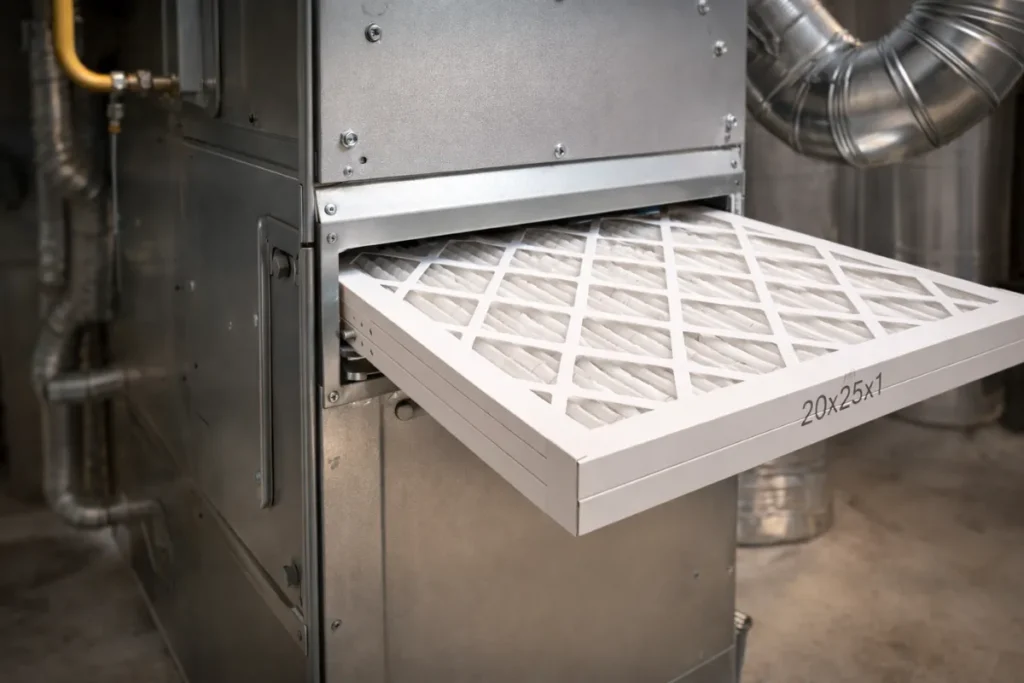
Filter efficiency is often described using a Minimum Efficiency Reporting Value (MERV) rating. Higher MERV ratings indicate greater ability to capture smaller particles. However, filters must be compatible with the HVAC system’s airflow capacity. Extremely dense filters in systems not designed for them may restrict airflow and reduce overall performance.
Routine filter replacement is equally important. Even high-efficiency filters lose effectiveness when overloaded with dust and debris. Ensuring that air return vents remain unobstructed and that duct systems are properly sealed can also improve overall circulation and particle removal.
A well-maintained HVAC system supports consistent indoor air movement, which contributes to balanced environmental conditions.
Consistency Over Quick Fixes
Indoor air quality improvement is an ongoing process rather than a one-time adjustment. Seasonal shifts, renovations, occupancy changes, and climate patterns all influence conditions over time.
Routine habits—monitoring humidity, maintaining ventilation systems, replacing filters when needed—often make a greater long-term difference than reactive measures.
A balanced approach ensures that improvements are proportional to actual conditions, not driven by assumptions.
Indoor Air Quality in Different Home Environments
Indoor air conditions vary significantly depending on building type, location, design, and occupancy patterns. Understanding these differences helps explain why strategies that work in one home may not apply in another.
Air quality is shaped not only by what occupants do—but by how the home itself is constructed and situated.
Apartments and Multi-Unit Buildings
In apartments and shared residential buildings, indoor air may be influenced by neighboring units. Cooking odors, smoke, or ventilation imbalances can move between spaces depending on building design.
Mechanical ventilation systems are often centralized, meaning airflow patterns are not fully controlled within a single unit. Additionally, urban apartments may be more exposed to outdoor traffic-related pollution, especially in densely populated areas.
Balancing ventilation while limiting outdoor pollutant intrusion becomes especially important in these environments.

Single-Family Homes
Detached homes typically allow greater control over ventilation systems and airflow management. However, they may also face additional variables such as:
- Attached garages
- Basements and crawl spaces
- Attic insulation quality
- Landscaping and outdoor pollutant exposure
Moisture control in basements is a common factor influencing overall home air quality. Improperly sealed foundations can introduce dampness and soil-related gases into living areas.
Older Homes
Older buildings often have more natural air leakage due to less airtight construction. While this can increase natural ventilation, it may also allow outdoor pollutants, allergens, or moisture to enter more freely.
Renovations in older homes can introduce new materials that release emissions temporarily. Balancing preservation with modernization requires attention to ventilation and moisture management.
Energy-Efficient and New Construction Homes
Modern energy-efficient homes are designed to minimize heat loss and improve insulation performance. While this supports energy savings, reduced air leakage can limit passive ventilation.
These homes often rely more heavily on mechanical ventilation systems to maintain balanced air exchange. When properly designed and maintained, such systems can support stable indoor air conditions. Without adequate ventilation planning, however, pollutants may accumulate.
Energy efficiency and indoor air quality are interconnected—both must be considered together rather than separately.
Homes in Wildfire-Prone or High-Pollution Areas
In certain regions, outdoor air quality events can significantly influence indoor conditions. Wildfire smoke, urban smog, or seasonal dust storms may temporarily elevate particulate levels indoors.
During such events, strategies often shift from increasing ventilation to limiting outdoor air entry while using appropriate filtration methods. Regional climate patterns and environmental trends therefore play a direct role in indoor air management.
Climate Differences and Global Considerations
Humidity, temperature, and building styles vary globally. Homes in tropical climates manage moisture differently than homes in cold northern regions. Arid climates face dry air challenges, while coastal regions manage persistent humidity.
Although principles of ventilation and pollutant control remain consistent, implementation depends on environmental context.
Indoor air quality should therefore be viewed as an adaptive process—responsive to building design, climate, and occupancy patterns.
Homes in tropical climates often prioritize moisture control due to persistent humidity and seasonal rainfall patterns. In arid regions, extremely dry air and dust infiltration present different challenges. Areas affected by seasonal monsoons or desert winds may experience periodic shifts in outdoor particle levels that influence indoor conditions. These environmental variations reinforce the importance of adapting ventilation and moisture strategies to regional climate patterns rather than applying uniform solutions.
Frequently Asked Questions About Indoor Air Quality
What is considered good indoor air quality?
Good indoor air quality generally means that the air inside a home feels fresh, maintains balanced humidity, and does not allow excessive buildup of pollutants. While there is no single universal number that defines “perfect” air, common residential benchmarks include moderate humidity levels (often between 30–50%) and proper ventilation that prevents stale or stagnant conditions.
Good air quality is less about achieving absolute purity and more about maintaining environmental balance.
What causes poor indoor air quality?
Indoor air conditions can decline for several reasons, including:
- Limited ventilation
- Excess indoor moisture
- Accumulation of dust and airborne particles
- Emissions from household products or building materials
- Combustion appliances that are not properly vented
- Outdoor pollution entering the home
In many cases, multiple small factors combine rather than one single source.
How can I improve air quality at home naturally?
Natural improvement strategies often focus on reducing pollutant sources and encouraging controlled airflow. These may include:
- Opening windows when outdoor conditions are favorable
- Using exhaust fans during cooking and bathing
- Maintaining balanced indoor humidity
- Reducing unnecessary chemical product use
Consistency in these habits can support gradual improvement over time.
Does opening windows improve indoor air quality?
Opening windows can improve air quality when outdoor air is cleaner than indoor air. This approach increases air exchange and dilutes indoor pollutants.
However, during high outdoor pollution events—such as heavy traffic periods, wildfire smoke, or high pollen seasons—opening windows may introduce additional particles indoors. Timing and environmental awareness are important.
How often should indoor air be tested?
Routine air testing is not always necessary in every home. Many households rely on observation and basic monitoring tools such as humidity meters or carbon monoxide alarms.
Testing may be considered when:
- Persistent odors are present
- Renovations introduce new materials
- Moisture problems are suspected
- Occupants experience recurring environmental discomfort
Evaluation should be guided by patterns rather than assumptions.
What is the ideal humidity level indoors?
Indoor relative humidity is commonly maintained within a moderate range—often around 30% to 50%—to support comfort and reduce excessive moisture accumulation. Levels above this range may increase condensation risk, while significantly lower levels may contribute to dryness during colder months.
Humidity needs may vary by climate and season.
Can indoor air be more polluted than outdoor air?
Yes. In certain situations, indoor air may contain higher concentrations of specific pollutants than outdoor air. Limited ventilation, indoor emission sources, and tightly sealed construction can allow contaminants to accumulate.
This is why balanced ventilation and source control are central to maintaining healthy indoor environments.
Is indoor air quality worse in winter?
In colder climates, indoor air conditions may change during winter because windows remain closed and heating systems operate continuously. Reduced natural ventilation can allow pollutants to accumulate more easily. Dry indoor air is also common during heating season.
What is PM2.5 in simple terms?
PM2.5 refers to extremely small airborne particles that are about 2.5 micrometers or smaller in diameter. Because of their size, they can remain suspended in air for extended periods and are small enough to be inhaled deeply into the lungs.
Do air purifiers remove volatile organic compounds?
Some air cleaning systems use activated carbon or similar materials designed to reduce certain gaseous compounds. Mechanical filters primarily capture particles and may not significantly affect gaseous pollutants. Effectiveness depends on system design and maintenance.
Indoor Air Quality and Sustainable Living

Indoor air quality does not exist in isolation. It is closely connected to how homes are designed, built, heated, cooled, and maintained over time. As sustainability becomes a greater focus globally, the relationship between energy efficiency and healthy indoor environments has gained increasing attention.
Modern buildings are often constructed to reduce energy loss. Improved insulation, advanced sealing techniques, and high-performance windows help conserve energy and reduce environmental impact. However, tighter building envelopes also reduce natural air leakage. Without intentional ventilation planning, reduced airflow may allow indoor pollutants to accumulate.
Indoor air quality is also one component of a broader concept known as Indoor Environmental Quality (IEQ). IEQ encompasses air conditions, thermal comfort, lighting, acoustics, and overall environmental performance within buildings. While ventilation and pollutant control influence air cleanliness, temperature regulation and humidity balance contribute to comfort and occupant well-being. Sustainable building design increasingly considers these elements together rather than in isolation.
Sustainable living therefore involves balance. Energy conservation strategies must be paired with adequate ventilation and moisture management. High-performance homes increasingly incorporate mechanical ventilation systems designed to provide controlled air exchange while maintaining efficiency.
Material selection also plays a role. Low-emission building materials, thoughtful furnishing choices, and responsible product use can reduce the introduction of airborne chemicals into living spaces. Over time, these decisions contribute to more stable indoor environments.
Climate change further highlights the importance of indoor environmental management. Rising temperatures, increased wildfire activity in some regions, and shifting humidity patterns can all influence indoor air conditions. Homes that adapt through flexible ventilation strategies and moisture control are better positioned to maintain consistent comfort.
Urban density is another factor. As more people live in multi-unit housing or highly populated cities, outdoor pollution exposure patterns shift. Sustainable urban design increasingly considers not only outdoor air monitoring but also building-level air management.
Ultimately, indoor air quality is part of a broader environmental ecosystem. A home that supports clean air, balanced humidity, and efficient airflow contributes not only to occupant comfort but also to responsible resource use.
Sustainability is not simply about lowering energy bills—it is about creating indoor environments that remain stable, adaptable, and resilient over time.
Conclusion: A Balanced Approach to Indoor Air Quality
Indoor air quality is not defined by a single measurement, device, or quick adjustment. It is the result of ongoing balance—between ventilation and energy efficiency, between moisture and dryness, between indoor sources and outdoor influences.
Homes are dynamic environments. Cooking, cleaning, heating, cooling, renovations, seasonal changes, and occupancy patterns all shape the air inside. Because of this, maintaining healthy indoor air conditions is less about achieving perfection and more about understanding patterns.

Throughout this guide, several foundational principles have remained consistent:
- Reduce pollutants at their source whenever possible
- Support steady, appropriate ventilation
- Maintain balanced indoor humidity
- Monitor conditions rather than relying on assumptions
- Adapt strategies based on climate and building design
When these elements work together, indoor environments tend to feel more stable and comfortable.
It is also important to recognize that indoor air quality is contextual. A solution that works in a humid coastal climate may differ from one used in a dry inland region. An apartment building presents different airflow considerations than a detached home. Effective management is therefore informed—not reactive.
As building standards evolve and environmental awareness increases, indoor air quality will continue to play an important role in how homes are designed and maintained worldwide. Thoughtful ventilation planning, responsible material choices, and consistent maintenance habits all contribute to long-term environmental stability.
Ultimately, improving indoor air quality begins with awareness. Observing how your home behaves across seasons, monitoring humidity and airflow, and making gradual adjustments creates a sustainable path forward.
Clean indoor air is not a luxury—it is the result of informed, balanced living.